Showing posts with label Resources. Show all posts

Friday, August 28, 2015

Hello from Pittsburgh!

It's been a while, I know.  This year started out with a bang with the breast cancer diagnosis, the cryoablation to a mystery tumor in my left side, the chaotic recovery that that caused, and the hunt for an apartment in Pittsburgh.  My plan was to post once things settled down after the move, but I'm having some trouble breathing and I had hoped to report a resolution to the problem in that post.  Now we're ending what has been a beautiful summer and I'm still looking for that resolution.

Mary found the perfect apartment complex for all my needs and Sadie and I are enjoying it very much.  It's a small one bedroom, but perfect for us with big windows in each room overlooking the Allegheny River and the Three Rivers Trail about 50 feet below.  Beyond the river is the Pittsburgh downtown skyline and the Convention Center.  Last night there was a massive fireworks show from the Rachel Carson Bridge (what I call "my" bridge), and I only had to walk onto my deck to enjoy it.
   

Less than a mile down the trail is PNC Stadium where the Pirates play, and beyond that is Heinz Stadium where the Steelers play. Since my lungs are limiting my physical activity these days, my deck is a great location for people-watching, on and off the river, as people run, bike, kayak, boat, jet ski and walk their dogs.     

Speaking of my lungs, I've seen doctors in Pittsburgh and at Hopkins and I've had every test to determine what is going on.  It seems that this may just be the result of cumulative scarring from the many surgeries, radiation plans and ablations over the past 9 years since I began my battle with metastatic disease.  I suppose it's the price I pay for playing Whack-A-Mole.  I'll see my pulmonologist next week and maybe he can think of a test I haven't had yet or a drug that can help me.  The good news is that I don't have an infection, collapsed lung, blood clot, heart issues or an obstruction.  There's also positive news on the research front. The National Cancer Institute just launched a huge project and both my hospital in Pittsburgh and Hopkins are participating facilities.  My new oncologist is submitting my name and I'm hopeful that I qualify, in spite of all my other cancers.  

The goal is to identify various immunotherapy agents that will jump start the immune system to fight cancer on its own.  You may have heard of some studies where researchers are using viruses such as measles, polio, even HIV, to accomplish this.  There has been enough success with some cancers, that researchers are starting to think that cancer will no longer be identified by the body part where it begins.  It will be identified by the genetic mutation(s) that cause a given cancer.  The first phase of the MATCH program is to genetically test a person's tumors for mutations.  Then the patient is matched with the immunotherapy agent -- which is not chemotherapy -- that will stimulate the immune system to respond and fight the cancer.  If I qualify, I may be in a trial with all sorts of non-ACC cancer patients.  The common denominator will be the genetic mutation, not the "type" or initial location of the cancer. The key to getting accepted into the one of the studies is having a mutation for which there is an agent that is currently being tested.  Now that I have a new immune system, courtesy of my donor, let's see what it can do!

The great thing about this project is that 2,400 facilities are involved, and patients will no longer have to travel several times a month to the trial city to get their medicine.  And since drug costs are covered by the trials, the financial hit that people take is substantially reduced.

My goal is to keep breathing long enough to take advantage of all this new science!  I am impressed and relieved at the care that I've received so far in Pittsburgh.  The doctors here actually read my cover letters and my 4 page Medical Summary, which is a commitment right off the bat.  Generally speaking, people here are extremely nice.  Maybe it's because of all the social and community events going on all the time. July brought Picklesburgh to my bridge, complete with live bands.  Maybe it's the crazy food.  They serve French Fries on salads, sandwiches and even pizza!  

I can tell by the foot traffic on the trail that there's a Pirates game tonight.  I have to say that this is a big improvement over my New Jersey neighborhood in the corner pocket of Maplewood, Newark and Irvington. And having Mary close by is like having a best friend, caregiver and personal assistant all in one thoughtful person. I never could have settled myself in without Mary's help.  And on the New Jersey side of the move, I owe a lot to Jim, Laura and all those who helped me downsize, pack, drive through Pennsylvania and reinvent my material self.  I threw away or donated at least 2/3 of my belongings, and this continued as I unpacked in Pittsburgh. If you ever want to leave a smaller footprint on the world, or just feel productive, call for a donation pick up.  It's a win-win for everyone. 

I hope everyone had a great summer.  Thanks so much to everyone who remembered my birthday.  It was so moving to know that I haven't been forgotten.  Here's to a new season of changes and opportunities.  I promise to do a better job of keeping you updated.

Kathy

CANcer + HEALth = CAN HEAL

Saturday, March 22, 2014

We Take Care Of Our Own

Word has it another storm is on the way.  Just when you think it's safe to leave your house and go to PT to rehab your busted wrist....  Although I'm bumbling through many of life's required tasks with my left hand, I'm still painfully slow (painful being the operative word).  I had the giant pin removed from the hardware that was recently installed to rebuild my wrist, the hard cast is off, and I've started PT.  My fingers are pretty useless and oh so painful, but I'm determined to work hard to resume a normal two-handed life soon.

Thanks to Mary, I made it up to Boston for the Adenoid Cystic Carcinoma Research Foundation (ACCRF) events.   The trip was exhausting, but I'm so glad I was able to meet other patients, the founders and organizers of the Foundation and the volunteers of their sister organization, ACC Organization International (ACCOI).  We shared stories, broke bread and learned about the latest research in the pipeline for a systemic treatment to stop this monster once and for all.  Sound like an unrealistic reach?  I might think so too.  But with what we know about what causes and drives ACC, and with all the scientists who are now working on research models, there's a lot of hope.

Hope is powerful.  So is having people with whom you can share that hope.  Cancer's a lonely journey; all serious illnesses are.  When it's a rare disease, the isolation can be severe.  Meeting people who speak my language is like gaining an instant family.  Or, as Bruce says,
Wherever this flag’s flown
We take care of our own.
Again, to all of you who donated to the fundraiser, my sincere thanks.

Kathy
CANcer + HEALth = CAN HEAL

Saturday, January 25, 2014

High Hopes

Happy New Year, everyone!  I hope that you all started 2014 with laughter, gratitude and health.  I have high hopes for this year and beyond.  Last year was bittersweet.  A year ago last month I learned that so much cancer had emerged, my doctors at Johns Hopkins had a hard time determining which organ to treat first.  After a tough January/February in Baltimore and more radiation in late June, I was pretty sure my luck was running out.  Then, by late summer, the tumors in my lungs were inexplicably stabilizing, shrinking, or falling off the radar all together.

I find it wonderfully helpful that Bruce Springsteen unknowingly follows my ups and downs with the release of his albums.  Wrecking Ball was timed perfectly with the wrecking ball that hit me last winter (see my Feb. 25, 2013 post).  This month Bruce released High Hopes, just as I try to manage my scan-xiety over the next set of scans at Johns Hopkins on February 7th.

My high hopes for 2014 are not just for me, but for all my Adenoid Cystic Carcinoma (ACC) brothers and sisters.  As many of you know, ACC is a slow growing, persistent cancer that can either go to sleep, hide or grow aggressively at any time.  For those of us who have experienced all three, we live life in the present, from one scan to the next.  I'm cautiously optimistic that my unique status as a bone marrow transplant recipient will prove my theory as to why things turned around for me (see my Sept. 14, 2013 post, N=1).  But for other ACC patients, this is not an option.

Since ACC is so rare, it is vastly underfunded.  The fastest, most effective way to stop this unrelenting disease (people commonly fight for decades) is money.  Well, it just so happens that the Adenoid Cystic Carcinoma Research Foundation, ACCRF is holding its annual fundraiser in the Boston area on March 8, 2014.  ACCRF is making incredible strides toward finding a cure.  They are working with the NIH, building scientific research boards and establishing global research agendas.  The event will be one for the record books and I'm really looking forward to it.  Please visit my fundraising page to learn more about the event and make a donation. 

Last year I joined an online discussion site through the Adenoid Cystic Carcinoma Organization International (ACCOI) -- sister organization of ACCRF -- an all volunteer group that sponsors a global community of ACC patients who share information and support.  Before joining this group, I found very few ACCers on my own.  I didn't really know about the experiences of having ACC first appear in the head/neck, where cancer can start in any gland in the face, neck or throat and travel from there.

Some of the people I've met online have gone through, or are currently managing, unthinkable obstacles.  (Since my cancer started in the breast, I was spared a lot.)  I've never seen a group of people hold each other up, push each other forward, and offer advice and experience that cannot be found anywhere in the medical community.  From Malaysia to Switzerland, China, Australia and all over the US, these people are wise beyond words, inspiring and unthinkably brave. Prior to the fundraiser there will be a patient meeting, where everyone can meet each other and learn of the latest research.  After 13 years, I will finally attend a meeting with others who understand the issues I've faced battling a cancer that few doctors have even heard of. 

I'm very hopeful about this year.  We're getting close to finding a cure, I can feel it. The ACCRF is making incredible alliances with researchers all over the world and I'm excited to see what comes of the exploding world of genomics in medicine.  I was not so hopeful this time last year.  I was nervous about living alone, upcoming treatments with unknown side effects, and my failing attempts to train my cat to be my personal assistant.  That last one hasn't changed, but today at least, I'm in a good place.  Signing up for satellite radio with the 24 hour Springsteen channel -- E Street Radio -- was also good for my psyche.

Looking forward to all good things.

Kathy 
CANcer + HEALth = CAN HEAL

Saturday, August 31, 2013

Modern Medicine = Science Fiction?

Ever since my stem cell transplant in late 2010, I've thought of medicine as science fiction.  These days, it's hard to even fathom what is taking place.  I still can't believe that my blood and bone marrow belongs to someone else, and that my donor's DNA is coursing through my veins.  That entire experience still blows my mind.

But, as we all know, I'm now fighting on a different battle field.  For the last 14 months I've returned to Cancer World, circa 2000, when I was first diagnosed with a rare head and neck cancer that appeared in a gland in my breast (Adenoid Cystic Carcinoma of the Breast or ACCB).  My latest battles began in June 2012 with more tumors in my lungs, kidney and a rib, with treatments ranging from surgery, radiofrequency ablation (RFA), cryoablation and radiation.  Then, in July, I had an about-face and a CT scan revealed that several lung tumors were shrinking or just going away.  I'm trying not to obsess on the results of the next PET/CT on September 13th, but I'm sure you can guess how that's going. 

In the meantime, I've been continuing my quest for answers.  The Human Genome Project began 10 years ago, and the research to predict a person's predisposition for illnesses based on genetics has exploded.
The last decade has revealed the transformative power of using genomic information for the diagnosis and treatment of cancer....  Determining the presence of specific genomic variants also avoids the implementation of ineffective treatments.
 In 2009, just before I was diagnosed with leukemia, a Swedish study found that a fusion of the MYB and the NFIB genes cause ACC (regardless of whether is occurs in the head/neck or the breast).  Since then, targeted therapies have been developed and several more are in the pipeline.  Targeted therapies are not chemotherapy.  They are agents that attach to receptors on cancer cells and turn off the growth, some even kill the cells.  A few clinical trials have emerged for these drugs to treat metastatic ACC, but participation can mean significant travel expenses and harsh side effects, making travel even harder.  It's a huge commitment to receive treatment with a study drug that is so new (no trials for ACC are more than two years old) and unproven.

Enter: Tumor Profiling.  Because of the advances of the Human Genome Project, the price of genetic testing has been driven down.  Cancer patients can now submit slides of their tumors (made during surgery when the pathologist determines a diagnosis) to an outside company to be tested for genetic abnormalities.  The results not only tell people what cancers they are predisposed to, but what clinical trials are available for those particular cancers.  A person can then decide which trial is likely to work, rather than just hoping that they choose the trial with the right drug that might save them.

As a friend recently told me, "Forget everything we knew about cancer treatment and research prior to ten years ago.  Everything will now be based on a person's specific genetics.  This is the future of medical science."  He's right.  The research I did on private companies identified by the Adenoid Cystic Carcinoma Research Foundation (ACCRF) does not pertain just to ACC patients, but to ALL cancer patients:

Foundation One -- They test for 236 known cancer genes.  The cost is $5,800.

Personal Genome Diagnostics: They have two tests. One tests for 120 cancer genes. This test is $4,800. The other test is for 20,766 cancer genes and is $12,500. They are associated with Johns Hopkins in Baltimore.

Oncopath: They test for 159 genes.  They wanted me to tell them which genes to test for, after which they would give me a quote.

Since research on genetics is happening so fast, I decided to wait to have my tumors profiled so that the test I choose will capture as many cancer genes as possible.  It only takes a few weeks to get the results from these companies.  All three have very nice staff and offer assistance with insurance coverage.  For many cancers, genetic testing is covered.  But the latest research on ACC and the need for genetic testing is so new, my best outcome would be to try and have this expense covered with out of network benefits.

Another newly discovered resource in my world is an online support group associated with the Adenoid Cystic Carcinoma Organization International, ACCOI. This all volunteer organization is incredibly helpful for ACC patients.  Over 1,400 people have joined the patient website, sharing their experiences, support and suggestions.  ACC is horrific because it is so rare and misunderstood.  It doesn't behave like most head/neck cancers and for me, it's not classic breast cancer either.  It's its own beast and because no known chemotherapy works, it's incredibly hard to find doctors who understand what it is, especially in remote parts of the world.  This group is to me what Facebook is to so many others.  I've "met" people from around the world and learned a wealth of information.  I even learned of four other people who have metastatic ACCB.  (You may not think that's a lot, but it is.)  I also learned of some very interesting connections between ACC and the Acute Myeloid Leukemia I had.  I'll save that for another post.  I have yet to find anyone on the site who has had a stem cell transplant.  As far as I know, I still hold the world record on that one.

As I face this next set of tests, I'm somehow comforted with all this new and overwhelming information. I feel like I have more tools, more weapons and more soldiers who are fighting at my side.  I think that the old paradigm of taking decades to bring drugs to market has changed.  This is hopeful for all patients with serious illnesses who are running out of time.

Genetic testing is no longer limited to familial connections.  It goes way beyond baldness and eye color.  No matter how much it looks like science fiction, genetics is providing a road map for survival, a road map for cures. It's all in the genes.

Kathy
CANcer + HEALth = CAN HEAL

Saturday, September 18, 2010

Be The Match: The National Marrow Donor Program

While I'm busy beating the AML beast back into remission, a national search is going on to find a donor that will be a match for me. My sister is being tested, but there's only a 1 in 4 chance that she'll be a match. If no one is found in the US, the search will go abroad. The National Marrow Donor Program (NMDP) or Be the Match, is the official registry for both stem cells and bone marrow searches and donations. I've had a crash course in transplants in the past few days, so I'll try to summarize what I've learned.

Several people have asked me how they can be tested so that the results can be directed to my transplant team. The first step is to check out the medical guidelines that list certain requirements for becoming a donor. Once these guidelines are met, there are two ways to be tested: Private Testing and registering with the Be The Match Registry.

Private Testing
Transplant matching is most successful if the donor and the patient is the same race and ethnicity. The NMDP is searching for donors for me that are Swedish, English or a combination of both, like me. If people are not in these categories, it would probably be a waste of time and money (it costs $150) to be tested privately. If people are in these categories, and want to be tested specifically for me, they can contact Lab Corp at 800-533-1037, where a Friends and Family account has been set up in my name. Potential donors would need to give their name, address, phone number, my name, and ask for HLA, A, B and DR screening (these are regions of genetic markers).

Lab Corps would send out a mouth swab kit, a requisition for the testing and federal express supplies to ship it all back. Once the testing is complete, they will fax the results to my transplant Case Manager and mail a copy to the person tested. The results will not tell the potential donor if they are a match or not. Someone from my transplant center will need to review the results and notify anyone who might be found to be a match. The testing takes between 7 - 10 days. When someone tests privately for someone else, they are not registered in the the Be The Match Registry for possible matching to someone else.

Be The Match Registry
According to the FAQs about joining the registry:
When you join the Be The Match Registry, you make a commitment to consider donating to any searching patient who matches you. As a volunteer, you are never under any legal obligation to donate and your decision is always respected. However, because a late decision not to donate can be life-threatening to a patient, please think seriously about your commitment before deciding to join our registry.

You can request a copy of your own testing results after you join the Be The Match Registry. However, if you want to be tested only for a specific patient, you will need to have your testing done privately.
When I called the Registry, I was told that 75% of the time donors are matched with patients who need stem cells (from blood) and 25% of the time donors are matched with patients who need bone marrow. A bone marrow donation requires surgery, so it's important to review the website thoroughly before registering. The testing process is the same as with private testing. Once someone joins online, a test kit is sent, which can be sent back free of charge. The Registry will ask for a donation to cover expenses and administrative costs. When a copy of the results come back to the donor, that person can fax them to the Case Manager on my transplant team and she will review the results to see if they are a match for me. My Case Manager is Christina DaCosta and her contact information is 201-996-5877 tel, 201-996-5691 fax.

According to my doctor, Scott Rowley, who is the Director of the Transplant Program at Hackensack, there are 19 million people who are giving, brave and altruistic enough to register for this international program. I find that incredible and amazing. Yes, once the mouth swab test is submitted, it's pretty unlikely that any one person is going to be a match for someone, but still. It's nice to think about 19 million people volunteering for something that could save lives, especially when the world is so full of bad news.

In the meantime, I'm riding the wave of side effects from the chemo. Just when I start feeling better, I'm due for another purple, yes purple, bag of chemo cocktails. By mid next week I should feel better and hopefully be through with treatment. Then my counts will drop, just like before, and I'll cross my fingers that I won't get any infections.

On the bright side, maybe I'll get to see the leaves turn after all. From my 8th floor room in Hotel Hackensack, my window looks out over trees and the western towns of Bergen County. If there are clouds in the late afternoon, I can even catch a sunset. Things are not so bad.

Kathy

CANcer + HEALth = CAN HEAL

Sunday, January 17, 2010

How Did This Happen? Some Theories

The question, "How the hell did I get leukemia after beating a completely different cancer twice?" bounces around in my brain on a daily basis. Now that I've lived with this diagnosis for 3 months, I've settled in on a few possible explanations.

Theory No. 1
The obvious question is whether the first cancer, Adenoid Cystic Carcinoma of the Breast (ACCB) is related to the second, Acute Myeloid Leukemia (AML).

On October 13, 2009, the same day that Dr. Forte found something terribly wrong with my routine blood tests, and only 6 days before I was diagnosed with AML, I received an announcement about a huge research breakthrough from the Adenoid Cystic Carcinoma Research Foundation (ACCRF). A new cancer gene was found by researchers at the Sahlgrenska Academy in Sweden:
The gene causes an insidious form of glandular cancer usually in the head and neck and in women also in the breast. The discovery could lead to quicker and better diagnosis and more effective treatment....

The research group can now show that the gene is found in 100% of these tumours, which means that a genetic test can easily be used to make a correct diagnosis.

“Now that we know what the cancer is down to, we can also develop new and more effective treatments... says professor Göran Stenman, who heads the research group at the Lundberg Laboratory for Cancer Research at the Sahlgrenska Academy. “One possibility might be to develop a drug that quite simply turns off this gene.”

The newly discovered cancer gene is what is known as a fusion gene, created when two healthy genes join together as a result of a chromosome change.

“Previously it was thought that fusion genes pretty much only caused leukaemia, but our group can now show that this type of cancer gene is also common in glandular cancer,” says Stenman.
That last point didn't seem as relevant to me on October 13th as it was on October 19th when I was told that I have leukemia. In fact, Dr. Forte told me after my first bone marrow biopsy that my cytogenetic tests contained fused leukemia cells. Maybe it's a coincidence, but I'm willing to consider the possibility that there's a connection between two seemingly unrelated cancers that are caused by fused chromosomes.

Theory No. 2
A simple review of the ACCB literature clearly demonstrates that chemotherapy is not recommended because ACCB grows too slowly to respond to chemotherapy. My first oncologist didn't take the time to research ACCB, and relied instead on a well known "expert on breast cancer" for my treatment plan. Together, they decided to treat my cancer "like any other invasive breast cancer," regardless of the fact that this was not typical breast cancer, but rather a glandular cancer. I was given 8 rounds of CMF, a cocktail of three drugs. One of these drugs, Cytoxan, is known to cause secondary cancers, the most common of which is AML. According to the American Cancer Society,
The cancer most often linked to chemotherapy as the cause is a type of leukemia called acute myelogenous leukemia (AML).... Studies of patients treated in the 1970s and 1980s have shown an increased risk of AML after certain types of chemotherapy drugs called alkylating agents were used to treat cancers like Hodgkin disease, non-Hodgkin lymphoma (NHL), ovarian, lung, and breast cancer.

Alkylating agents known to cause leukemia include:
cyclophosphamide (Cytoxan®)....
That "expert," when questioned in 2006 about the bad advice he gave my first oncologist in 2000, predictably denied ever recommending CMF. Needless to say, I switched oncologists and started going to Dr. Forte, who understood the nature of ACCB because he made time to do the necessary research. This is an example of why it's so important that we participate in the research process and not rely on one or even two doctors to decide something as life altering as cancer treatment.

Theory No. 3
From 1957 to 1975, Motorola Inc. used the degreasing agent trichlorethylene (TCE) to clean electronic parts made in its south Scottsdale, Arizona, plant. In early 1975, a significant amount of TCE had been dumped into the area around the plant and TCE had contaminated the groundwater. The area was identified as a Superfund site in 1983. My family moved to south Scottsdale, to the middle of the Superfund site, in 1967 when I was 7 years old. I lived there till I was 18. My mother, also a cancer survivor, still lives in that house. I'm told that the number of cancer cases in that area over the last several decades is staggering. (No liability was found in either the personal injury or the property damage class action suits.)

Research shows that AML can be caused by exposure to benzene, and there are plenty of lawsuits to back that up. Benzene finds its way into many Superfund sites because it's used in the manufacturing process of so many products. Who knows if growing up in the middle of the south Scottsdale Superfund site had anything to do with either of the chromosomal fusion-based cancers I've been fighting? It certainly didn't help.

Theory No. 4
All of the above.

Theory No. 5
None of the above.

The question, "How did I get cancer?" is one that haunts all cancer survivors. We wonder if there was something we did wrong, something we should have seen earlier. The fact is, cancer is random. It doesn't discriminate. All I can do at this point is focus on Theory No. 1 -- the new gene discovery that holds the most promise, hope for future answers and possible treatments for the cancers I've been dealt. In the meantime, we are obligated, whenever possible, to share our knowledge, our mistakes, and the resources we've stumbled across in our attempt to navigate these scary waters. Such is our task, as we put aside the question "Why?" and try to discover the good that can come from something so evil.

Kathy

CANcer + HEALth = CAN HEAL
Wednesday, October 28, 2009

Induction Treatment, Day 7: Last Day of Chemo (for now) and Some Good News

Well, this has been interesting. I expected to be wiped out, barely able to get around, nauseous all the time or worse. The types of chemo I've received don't really make me too sick, and I haven't needed any transfusions so far. The real side effects come with the crashing of my blood counts - the risks of infections, bleeding and fevers. I just started having some weird complications, such as jaw pain, heartburn and a nail infection. At most, I only need the anti-nausea medication once a day. I haven't lost my hair yet, but that should happen any day now. Later this afternoon I will start my last of this 7 day 24/7 infusion of Cytarabine, or Ara-C. Then I think I will get a break. My counts will continue to drop, and then slowly I will re-build my bone marrow. Once that happens, I'll have another bone marrow biopsy to see if I need more treatment.

Once I enter what's called Complete Remission, I may get a longer break before entering the Consolidation Phase. Consolidation is necessary to provide more therapy to eliminate non-detectable disease and prevent relapse — that is, achieve a cure. Typically, this means high doses of Ara-C for 3 of 5 days, once a month for 4-6 months, depending on my blood levels. I thought at first that this current 6 weeks of Induction would be the end of the chemo story, but this is only the first half of the equation. How I'll feel and how much I'll be able to do during Consolidation remains to be seen. All I care about right now is going into remission and getting well enough to go home to my kitty!


Dr. Forte called my room the other night and was very excited to deliver good news. There are subtypes of Acute Myeloid Leukemia, (AML), from M0-M7, and these subtypes have very different treatments and prognoses. I learned that I have M4 eos, which is much better than the more common M4. And he told me that I have a really cool chromosomal abnormality. Here's the lowdown:

The most important factor for predicting a prognosis is cytogenetics, or the chromosomal structure of the leukemic cell. Certain cytogenetic abnormalities are associated with very good outcomes, one of which is called inversion 16, or inv(16). This means that one of the genes on chromosome #16 is flipped. This is good because it's easy to detect and once it's found, I can get treatment before things go downhill. The upshot is that this wacky chromosome significantly increases my chances of long term survival and reduces my chances of a relapse.

Dr. Forte is also researching the possibility of other treatments that will further reduce my chances of a relapse. Even with a Complete Molecular Remission (the best kind of Complete Remission), some hidden cancer cells can still exist. Of course he doesn't want me to have anything that I don't need, and neither do I. But he is talking with a bunch of other doctors to come up with the best plan for me to be around long enough to die of something other than stupid cancer!

Today I read a new post in my favorite resource for anti-cancer prevention and general health, Anticancer, by Dr. David Servan-Schreiber, called Getting by with a little help from our friends. If these findings are true, I'm on my way to being the healthiest person I know, thanks to all of you who have helped in countless ways already!

Kathy

CANcer + HEALth = CAN HEAL

Sunday, September 6, 2009

Resources: Livestrong - Blog and Facebook

I only recently discovered all that the Lance Armstrong Foundation, Livestrong, has to offer. They are a wealth of information, with international programs that are making a huge dent in the fight against cancer. They offer resources on survivorship, community programs, grants and research and many other ways to plug in and get involved. It's a place to go for answers.

From the main page of the website you can find the Livestrong blog, subscribe, and receive e-mail updates to all posts. From the blog you can also join Livestrong's Facebook page, where you can become a fan without having to send a Friend Request. This is where you can post any question or share experiences. I have asked questions and within a few hours, received very helpful information. It's as if there's a magic genie monitoring the Facebook page waiting for people to ask for help. Here's an example:


As someone who is constantly searching for answers, this is a gold mine! I am truly grateful for this forum and the magic genies who maintain it.

Livestrong!

Kathy

CANcer + HEALth = CAN HEAL

Sunday, June 14, 2009

Pura Vida! Blue Zones, Lifestyle and a Must Read Book

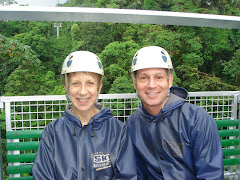
I recently returned from 12 days in Costa Rica, one of the planet’s blue zones - 5 spots on the globe where people frequently live well past 100. Blue zones are defined by the longevity of their people, and several lifestyle characteristics, among which are family, a plant based diet, constant physical activity, social engagement, a positive attitude and no smoking.

These characteristics are mirrored in a book that I highly recommend called, Anticancer - A New Way of Life, by Dr. David Servan-Schreiber. Since cancer makes us feel completely helpless, it's important to take control whenever possible. One area we have control over is our lifestyle. For those who are sick, recovering, or just want to live healthy, this book is a must read. It has become a bible for me.

Since I was diagnosed again in 2006, I made several lifestyle decisions specifically aimed at how to best heal myself of metastatic disease. I spent about a year researching and developing my own treatment plan and implementing the advice of several alternative doctors and nutritional counselors. When I read “Anticancer,” I learned that not only was I on the right track, but I found tons of scientific evidence for what has become for me “A New Way of Life.”

Dr. Servan-Schreiber is himself a 15 year cancer survivor. While working as a research scientist on brain imaging, he was confronted with his worst nightmare: brain cancer. Having spent a year researching why some people get cancer and other people don’t, his book is full of sites to scientific studies that make any skeptic want to pass on the french fries. The premise of the book is to take control of these 4 areas of our lives: 1. our environment; 2. our diet; 3. our state of mind, and 4. our relationship with our bodies to stimulate our immune systems so that we can heal ourselves.

So who has time to revamp their lifestyle? It’s not as hard as you think. My favorite part of the book is chapter 8, The Anticancer Foods – not because I can cook, but because I love to eat. In fact, I usually don’t cook at all. Who has time? Most of the time I buy healthy foods and I warm them up. Thankfully, "Anticancer" is not all about sacrifice. I was thrilled to learn the scientific justification for eating dark chocolate and drinking red wine! See pages 127-128. The book points out how healthy food decisions can not only prevent cancer, they can prevent most other major diseases as well. Dr. Servan-Schreiber’s website has a blog component that addresses countless topics about fighting cancer and healthy living. My little blog can’t possibly add to the landscape that he has provided.

There’s a saying in Costa Rica, home of a blue zone, and the cleanest, most environmentally green spots on Earth. The saying is, “Pura Vida!” It means “pure life,” or “the good life.” It is used to say hello, goodbye, how’s it going, going fine, what’s up, good to see you, and other positive expressions connecting us to one another. It’s my new favorite motto. If it were a little shorter, I would name my new kitten, “Pura Vida!” It represents to me, living life the way that we were designed to live it: as healthy, happy residents of this planet, free of disease and capable of managing the stress of daily living in a complex world. I wish this for us all. Pura Vida!

Kathy

CANcer + HEALth = CAN HEAL