
3 days ago
Showing posts with label Radiofrequency Ablation. Show all posts
Showing posts with label Radiofrequency Ablation. Show all posts
Monday, January 25, 2016
Tomorrow there'll be sunshine and all this darkness past...
There's really nothing quite like watching a frozen river during a snow storm. Seeing massive chunks of ice creep along in front of the Pittsburgh skyline is a very dramatic sight, especially from inside, where it's warm and toasty.
A few of you received advanced notice that my options have run out and I've decided to take advantage of the services that hospice provides at home. My last post talked about a few possibilities that I was going to pursue. These didn't really work out. The doctor in Virginia who specializes in proton therapy turned out to be a disappointment. About a week after returning from that very long road trip over the busiest travel weekend of the year (Thanksgiving), my breathing took another dive and I could not walk and breathe at the same time. I spent about a week in the hospital while the doctors tried to rule out some obvious causes for the problem -- blood clot, infection, collapsed lung, excess fluid, etc. The verdict was the same as it was when this first became a problem in the summer: my lungs are shot from progressing cancer and over 30 local treatments to control it over the past 15 years. Any additional radiation or ablations would do more harm than good and I'm not strong enough for more whack-a-mole attempts to stay ahead of this.
I had some tumor samples from the lung surgery in 2012 tested for genetic mutations to see if any experimental drugs might help slow things down. This also turned out to be a dead end. Even if there is something that might help prolong the inevitable for a few months, I've had more drugs to fight leukemia from 2009 through 2011 than anyone can expect to withstand in one lifetime.
We knew this day would come. I've been lucky to have made it this far with my history of 3 serious cancers. I'm now on oxygen 24/7 and I can't leave my apartment on my own two feet. My breathing problems make it difficult to talk, so I've limited my communications to email. I'm also not the type of person who wants people around when I'm sick, so these factors have led me to request that people not come to visit. It's easier on me in about a dozen ways, so I thank those of you who have respected these wishes.
I spend my day managing my symptoms, watching DVRd TV shows with Mary, as she works hard at being the world's best caregiver, and petting Sadie as much as she will let me. Watching the news and the ridiculous political campaigns keep me pondering what kind of world I'm leaving. I hope I'm around to see Donald Trump go down in flames. Hey, my blog, my opinion, my last wishes!
Along with Mary's daily visits to keep me sane, the hospice team comes almost everyday too and they are all wonderful. I wish they didn't have the reputation of call-only-when-the-person's-about-to-croak. I feel that hospice workers are misunderstood. They can provide help that no one else can and with experience and compassion. Knowing I will no longer receive any treatment, I don't have to worry about doctors' appointments, medical tests, or decisions about where to go next. I'm very grateful for my team here and the care I'm receiving. The goal of hospice is to make me feel as comfortable as possible.
It may take several months for my body to call it quits. Or it may not. I feel like my body deserves a rest and I'm not at all afraid of dying. I will leave this life knowing that I have given it my very best shot -- chasing down doctors, medical techniques, research, and advice from the amazing community of ACC patients all over the world.
I know that most people fear everything about death and dying -- even talking about it. Much more destructive than death, in my opinion, is denial. Denial will wreck you. When someone tells you that they've made a decision about how to live or die, don't deny them your support and unconditional love. Most people, in their grief and anticipated loss, just don't know what to do or say. It's hard for everyone. But it's mostly hard for the patient. Here are a few dos and don'ts when it comes to things to say to a cancer patient (or about me):
1. "She lost her battle to cancer." (Read here.) The implication is that I just didn't fight hard enough. Nothing could be more offensive.
2. "God never gives you more than you can handle." This is another annoying cliché. The God I believe in would never test people to see how much they can handle. How mean would that be?
3. "Everything happens for a reason." Really? Bullshit. This is one of the most insulting things a cancer patient can hear. Classic Blame The Victim.
4. "What is your prognosis?" Well, if it's not good, you've just made the person feel like crap having to explain that they're in bad shape.
And the list goes on....
The problem is that people don't have any good examples of helpful, loving ways to express support instead of these unhelpful blunders. A better approach would be to ask them what they need and how you can help. Then listen to what they say and do it, whether you agree with it or not. It's their illness, not yours.
And now that I've rambled on and on, I can't say for sure if this will be my last blog post or not. As with everything in life, we should assume that this moment is our last and cherish what we have right now.
As long as I can stay in the present, I can honestly say that I am happy that this will soon be over. It's hard for my ego not to make a mental wish list for my next lifetime. My faith is in the Higher Power that resides in all of us, so I'm good with whatever comes next. I'm hoping that if I end up on Earth again, I'll have better hair and dimples, but who's to say that would make me happy? For now, I'll watch my DVRd TV shows (suggestions for binge watching are welcome), enjoy Sadie and watch the river just outside my door. My energy comes and goes, so please forgive me if I take a while, or can't, respond to your messages. Know that they are received and appreciated.
I want to thank all of you for your love and support when I've been sick and when I've been well. I'm a very lucky person to have known all of you, even those of you I've never met in person. Take care of your bodies, take care of each other, take care of the planet.
I love you all.
Kathy
CANcer + HEALth = CAN HEAL
Sunday, October 25, 2015
Hard times come, and hard times go... Yeah just to come again
I'm a nester. It's all about comfort for me. My massage therapist, Marty, begins each session telling me to imagine a place that makes me happy. He suggests a beach, the mountains, a favorite vacation spot. I imagine lying on my new couch, with the softest throw ever made and Sadie sleeping on my lap. It's the best Happy Place I could ever hope for. Comfort is serving an important role in my life these days. It buffers what most would see as bad news.
I received the Hopkins interpretation of the scans I had earlier this month in Pittsburgh. They show new areas of cancer in my lungs, some old areas that have grown, and some that have stayed the same. The most dangerous tumor in the hilar region that has already been ablated and radiated seems to be stable. But because it is still active, it's still very dangerous. Also, it was reported that some tumors in the lining of my lungs (the pleura) are infiltrating my chest wall. Other scary things are described to the point of being overwhelming. However, everything that's growing isn't growing super fast and nothing is measuring too big to treat. The problem is that there is too much to treat.
I can't really say that this is a surprise. I've had bad scans before and somehow my doctors have managed to address everything one crisis at a time. But now that I have such trouble breathing, the risk benefit analysis of continuing with the Whack-A-Mole approach becomes questionable, as Dr. Georgiades wrote to me. Every ablation requires a 1 cm. margin that kills healthy tissue to ensure the ablation is successful. Every radiation plan also kills some healthy tissue and creates scarring as the beams travel to and from the targeted area. Considering all my past procedures, my remaining lung mass needs to be preserved as much as possible (I lost about 30% over 3 surgeries).
With the shortness of breath and wheezing I now have, I have to consider the impact on the quality of life that more Whack-A-Mole would have. I'm reminded of Joe Biden. If I'm going to be in this race, I need to decide if I have what it takes before my window of opportunity closes. Time for more opinions. Many ACC patients go to radiation oncologists who offer proton beam radiation. Standard radiation is with photons. One is just as precise as the other, but proton therapy is a newer technique that eliminates the "exit path" of the beam. "Higher doses of radiation can be used to control and manage cancer while significantly reducing damage to healthy tissue and vital organs." Hopkins is building a proton center, but it won't be ready until 2017. There are 15 proton centers in the US and a couple of them have seem many, many ACC patients. Looks like I'll have a road trip or two to talk to the doctors who have treated so many of my ACC brothers and sisters.
In the meantime, I am having my tumors genetically profiled by two separate labs to determine if I have any cancer mutations. If I do, there may be a clinical trial open that targets that particular mutation. I should know the results of these tests in a month or two. Having one or more mutations doesn't give me more options per se. But it would get me closer to the possibility of finding a drug that might stop my tumors from growing -- or, best case scenario, shrinking them -- for awhile. Most trial results so far only show that the drug works until ACC finds a way around it. This disease is a monster. But it's still a hopeful time for us. Science is moving so fast, cancer is being redefined by genetic research. Since there's a lot of money to be made from this, innovation is moving at warp speed.
Back to Marty. When I shared my news with him, he asked me how I'm coping with it all and if I'm okay. I really am, for two reasons. 1. I'm getting used to this roller coaster. My stomach still lurches as I plunge downward. But I don't puke with fear like I used to. I think this is because I have recovered from circumstances that appeared hopeless. Statistically, I never should have lived through leukemia in 2009 or the many ACC battles since then. 2. I'm focusing on comfort. My nesting nature is in high gear. As I slowly taper off steroids (given to see if they help my breathing), my mind spins with ideas for increasing comfort. I decided to buy an adjustable bed. I often have to prop myself up in the middle of the night to help me breathe, so it made sense. And since I was headed for a hospital bed at some point in the future, why not get a plush, super comfy memory foam bed now, while I can enjoy it? Normal people are getting them, according to the commercials, so I don't feel like a cancer-patient-hospital-bed person. My new Happy Place, with all its bells and whistles, was delivered on Friday, it fits perfectly in my bed frame, it is beautiful, and my sleep is amazing! With a wireless remote to control the head, feet and massage features, I'm too happy to be depressed. Sadie was very suspicious. I watched with evil curiosity to see if, upon raising the feet, she was cat-a-pulted as a projectile to the top of the bed! (Thanks, Laura, for the pun. I'm sure Cheryl will appreciate it.)
I've found that Retail Therapy is good for my psyche. Comfort through consumerism. As I look forward to Thanksgiving with Mary and her family in Pittsburgh for the first time, I can't be anything other than grateful for my new life, regardless of what the next chapter reveals. As much as people deny it, we're all living on borrowed time. I just have a little more information on the time I have left than most people do. Make every day Thanksgiving. Find comfort in your life. Buy an adjustable bed.
Kathy
CANcer + HEALth = CAN HEAL
I received the Hopkins interpretation of the scans I had earlier this month in Pittsburgh. They show new areas of cancer in my lungs, some old areas that have grown, and some that have stayed the same. The most dangerous tumor in the hilar region that has already been ablated and radiated seems to be stable. But because it is still active, it's still very dangerous. Also, it was reported that some tumors in the lining of my lungs (the pleura) are infiltrating my chest wall. Other scary things are described to the point of being overwhelming. However, everything that's growing isn't growing super fast and nothing is measuring too big to treat. The problem is that there is too much to treat.
I can't really say that this is a surprise. I've had bad scans before and somehow my doctors have managed to address everything one crisis at a time. But now that I have such trouble breathing, the risk benefit analysis of continuing with the Whack-A-Mole approach becomes questionable, as Dr. Georgiades wrote to me. Every ablation requires a 1 cm. margin that kills healthy tissue to ensure the ablation is successful. Every radiation plan also kills some healthy tissue and creates scarring as the beams travel to and from the targeted area. Considering all my past procedures, my remaining lung mass needs to be preserved as much as possible (I lost about 30% over 3 surgeries).
With the shortness of breath and wheezing I now have, I have to consider the impact on the quality of life that more Whack-A-Mole would have. I'm reminded of Joe Biden. If I'm going to be in this race, I need to decide if I have what it takes before my window of opportunity closes. Time for more opinions. Many ACC patients go to radiation oncologists who offer proton beam radiation. Standard radiation is with photons. One is just as precise as the other, but proton therapy is a newer technique that eliminates the "exit path" of the beam. "Higher doses of radiation can be used to control and manage cancer while significantly reducing damage to healthy tissue and vital organs." Hopkins is building a proton center, but it won't be ready until 2017. There are 15 proton centers in the US and a couple of them have seem many, many ACC patients. Looks like I'll have a road trip or two to talk to the doctors who have treated so many of my ACC brothers and sisters.
In the meantime, I am having my tumors genetically profiled by two separate labs to determine if I have any cancer mutations. If I do, there may be a clinical trial open that targets that particular mutation. I should know the results of these tests in a month or two. Having one or more mutations doesn't give me more options per se. But it would get me closer to the possibility of finding a drug that might stop my tumors from growing -- or, best case scenario, shrinking them -- for awhile. Most trial results so far only show that the drug works until ACC finds a way around it. This disease is a monster. But it's still a hopeful time for us. Science is moving so fast, cancer is being redefined by genetic research. Since there's a lot of money to be made from this, innovation is moving at warp speed.
Back to Marty. When I shared my news with him, he asked me how I'm coping with it all and if I'm okay. I really am, for two reasons. 1. I'm getting used to this roller coaster. My stomach still lurches as I plunge downward. But I don't puke with fear like I used to. I think this is because I have recovered from circumstances that appeared hopeless. Statistically, I never should have lived through leukemia in 2009 or the many ACC battles since then. 2. I'm focusing on comfort. My nesting nature is in high gear. As I slowly taper off steroids (given to see if they help my breathing), my mind spins with ideas for increasing comfort. I decided to buy an adjustable bed. I often have to prop myself up in the middle of the night to help me breathe, so it made sense. And since I was headed for a hospital bed at some point in the future, why not get a plush, super comfy memory foam bed now, while I can enjoy it? Normal people are getting them, according to the commercials, so I don't feel like a cancer-patient-hospital-bed person. My new Happy Place, with all its bells and whistles, was delivered on Friday, it fits perfectly in my bed frame, it is beautiful, and my sleep is amazing! With a wireless remote to control the head, feet and massage features, I'm too happy to be depressed. Sadie was very suspicious. I watched with evil curiosity to see if, upon raising the feet, she was cat-a-pulted as a projectile to the top of the bed! (Thanks, Laura, for the pun. I'm sure Cheryl will appreciate it.)
I've found that Retail Therapy is good for my psyche. Comfort through consumerism. As I look forward to Thanksgiving with Mary and her family in Pittsburgh for the first time, I can't be anything other than grateful for my new life, regardless of what the next chapter reveals. As much as people deny it, we're all living on borrowed time. I just have a little more information on the time I have left than most people do. Make every day Thanksgiving. Find comfort in your life. Buy an adjustable bed.
Kathy
CANcer + HEALth = CAN HEAL
Sunday, February 15, 2015
Some steps forward, some steps back?
The phrase "___ steps forward, ___ steps back" changes for me nearly on a monthly basis. Last month, with the discovery of breast cancer, I would have said "one giant step back." But the surgery went well, I was in the hospital only one night, and the pathology results showed that the margins were clear with no sign of lymph node invasion.
For those of you who speak Breast Cancer, I was triple negative for hormone receptors, meaning that chemotherapy would not give me a leg up on long term survival. With radiation off the table, I don't need any additional treatment. In my book, this is the best outcome I could have hoped for. As I told my ACC friends, one less boob, one less cancer. A few steps forward.
Time to turn back to ACC and the ongoing game of whack-a mole. I had a PET/CT here in NJ as part of my pre-op testing, and sent the scans to Dr.s Hong and Hales at Hopkins for their review. There were some wacky findings in wacky places, making it hard to come up with a clear plan of treatment. We decided that I should come to Hopkins for consults and physical examinations of these wacky places.
Both doctors are "happy" with the overall state of my lungs right now. But their definition of "happy" is not the same as mine. The "multiple bilateral pleural nodules" numbering anywhere between 8 and 20, depending on the accuracy of the scan, are either stable or growing slowly. This means that treating them with RFA, cryoablation or radiation is not needed right now. So is this a step forward or a step back? I'm not sure where to put my foot. "Just because a nodule might be big enough to treat doesn't mean we need to treat it now." This goes completely against my OCD if-you-can-see-it-kill-it mentality. The truth is, these nodules need to be monitored over time to make sure some aren't inflammation from prior treatment. Also, I need time to rebuild my stamina between assaults, such as an out-of-nowhere mastectomy.
In the meantime, an area of cancer revealed itself in an area behind my left kidney and under my diaphragm, called the retrocrural space. Apparently, this is soft tissue that holds the organs in the abdominal area together. Seriously? I have more cancer just randomly hanging out in the neighborhood of my diaphragm? Because I have fairly serious scoliosis, it's hard to get a fix as to the boundaries of this thing. Some of the area that is not "hot" on the scan could be muscle that is twisting around my spine to compensate for the scoliosis. Because of this, we decided that Dr. Hong would cryoablate the smaller, more defined part that is clearly cancer, and wait to see how the rest of the area responds over time. If necessary, Dr. Hales can radiate whatever is left that we can definitely determine is cancer rather than muscle. Since ACC is a gland cancer, I asked if there are glands back in this area. Basically, there are glands all over, and scans just can't illuminate if this is in a gland or not. Metastatic disease sometimes shows up in lymph nodes in the retrocrural space. Bottom line: it's lighting up, it's growing faster than anything in my lungs, and it needs to be killed before it gets too big to ablate. Is this many steps back or a small step forward if it turns out to be a smaller, treatable area?
And if this isn't enough, I noticed a very sore area several months ago over my right kidney. Eventually, a small bump appeared that is super duper sore. This is the classic pattern of ACC if it's close enough to the surface to feel. My radar went off because this is the place where I had a cryoablation for a kidney tumor two years ago. When I showed the lump to Dr. Hales and Dr. Hong, they were perplexed. It's exactly over the spot of the 2013 cryoablation. It's hard to see on the scans, but it's there. Sometimes there is a very small risk of cancer cells escaping when a biopsy is done or with a procedure that uses a needle to pierce a tumor. It's called seeding.
This is a controversial topic in research circles. Biopsies are a standard part of diagnostic medicine and the benefits far outweigh the risks. But it happens every so often. Because it's so unusual, Dr. Hong was reluctant to conclude that this lump is the result of seeding. "How many ablations have you had and you've never had seeding?" he asked me. "True, I've had 10 ablations, but they killed 25+ tumors. If one tumor seeded, I wouldn't be shocked. Plus, the kidney tumor was 5 cm. and took 4 needles to ablate." There is no data on the rare occurrence of seeding on a rare disease like ACC, so we can't draw any conclusions. Maybe it's just a random tumor in random tissue, like the mystery cancer near the left side of my diaphragm. Who the hell knows?
The question now is how to treat it. Since this lump is so close to the surface, both RFA and cryoablation are too dangerous (several steps back). So, Dr. Hong passed the ball to Dr. Hales and I'll be having a one shot dose of radiation to kill this wayward tumor using electrons rather than the usual photons, which is somehow safer. Some steps forward, as long as it works.
We couldn't have come up with a plan for all this without me going to Baltimore on Friday to talk it out between the three of us. It was pretty instructive to bounce theories off both doctors and talk about the pros and cons of each option as we went through the scans from head to thigh. I'll be having the cryoablation to the weird space near my diaphragm on February 27th. The one shot dose of radiation over my right kidney will be around March 9th.
Less than 3 weeks since the mastectomy, I'm pretty sore all over and wiped out. I slept 13.5 hours yesterday and 11 last night. As I hunker down till this freezing weather passes, it's hard to say whether or not I'm moving forward, backward or just treading water. I just know that I'm happy to have a plan in place, that the breast cancer is under control and that I will still be able to move to Pittsburgh in the spring. The most important thing right now is knowing that I'm in good hands -- from my medical team to my local and long distance friends to Mary, who is acting as my apartment scout in Pittsburgh. Rather than looking from month to month, it seems I'm making progress from year to year. The key is to face forward and hang on tight. My feet will land where they are meant to land, even if there's a step back every now and then.
Kathy
CANcer + HEALth = CAN HEAL
For those of you who speak Breast Cancer, I was triple negative for hormone receptors, meaning that chemotherapy would not give me a leg up on long term survival. With radiation off the table, I don't need any additional treatment. In my book, this is the best outcome I could have hoped for. As I told my ACC friends, one less boob, one less cancer. A few steps forward.
Time to turn back to ACC and the ongoing game of whack-a mole. I had a PET/CT here in NJ as part of my pre-op testing, and sent the scans to Dr.s Hong and Hales at Hopkins for their review. There were some wacky findings in wacky places, making it hard to come up with a clear plan of treatment. We decided that I should come to Hopkins for consults and physical examinations of these wacky places.
Both doctors are "happy" with the overall state of my lungs right now. But their definition of "happy" is not the same as mine. The "multiple bilateral pleural nodules" numbering anywhere between 8 and 20, depending on the accuracy of the scan, are either stable or growing slowly. This means that treating them with RFA, cryoablation or radiation is not needed right now. So is this a step forward or a step back? I'm not sure where to put my foot. "Just because a nodule might be big enough to treat doesn't mean we need to treat it now." This goes completely against my OCD if-you-can-see-it-kill-it mentality. The truth is, these nodules need to be monitored over time to make sure some aren't inflammation from prior treatment. Also, I need time to rebuild my stamina between assaults, such as an out-of-nowhere mastectomy.
In the meantime, an area of cancer revealed itself in an area behind my left kidney and under my diaphragm, called the retrocrural space. Apparently, this is soft tissue that holds the organs in the abdominal area together. Seriously? I have more cancer just randomly hanging out in the neighborhood of my diaphragm? Because I have fairly serious scoliosis, it's hard to get a fix as to the boundaries of this thing. Some of the area that is not "hot" on the scan could be muscle that is twisting around my spine to compensate for the scoliosis. Because of this, we decided that Dr. Hong would cryoablate the smaller, more defined part that is clearly cancer, and wait to see how the rest of the area responds over time. If necessary, Dr. Hales can radiate whatever is left that we can definitely determine is cancer rather than muscle. Since ACC is a gland cancer, I asked if there are glands back in this area. Basically, there are glands all over, and scans just can't illuminate if this is in a gland or not. Metastatic disease sometimes shows up in lymph nodes in the retrocrural space. Bottom line: it's lighting up, it's growing faster than anything in my lungs, and it needs to be killed before it gets too big to ablate. Is this many steps back or a small step forward if it turns out to be a smaller, treatable area?
And if this isn't enough, I noticed a very sore area several months ago over my right kidney. Eventually, a small bump appeared that is super duper sore. This is the classic pattern of ACC if it's close enough to the surface to feel. My radar went off because this is the place where I had a cryoablation for a kidney tumor two years ago. When I showed the lump to Dr. Hales and Dr. Hong, they were perplexed. It's exactly over the spot of the 2013 cryoablation. It's hard to see on the scans, but it's there. Sometimes there is a very small risk of cancer cells escaping when a biopsy is done or with a procedure that uses a needle to pierce a tumor. It's called seeding.
This is a controversial topic in research circles. Biopsies are a standard part of diagnostic medicine and the benefits far outweigh the risks. But it happens every so often. Because it's so unusual, Dr. Hong was reluctant to conclude that this lump is the result of seeding. "How many ablations have you had and you've never had seeding?" he asked me. "True, I've had 10 ablations, but they killed 25+ tumors. If one tumor seeded, I wouldn't be shocked. Plus, the kidney tumor was 5 cm. and took 4 needles to ablate." There is no data on the rare occurrence of seeding on a rare disease like ACC, so we can't draw any conclusions. Maybe it's just a random tumor in random tissue, like the mystery cancer near the left side of my diaphragm. Who the hell knows?
The question now is how to treat it. Since this lump is so close to the surface, both RFA and cryoablation are too dangerous (several steps back). So, Dr. Hong passed the ball to Dr. Hales and I'll be having a one shot dose of radiation to kill this wayward tumor using electrons rather than the usual photons, which is somehow safer. Some steps forward, as long as it works.
We couldn't have come up with a plan for all this without me going to Baltimore on Friday to talk it out between the three of us. It was pretty instructive to bounce theories off both doctors and talk about the pros and cons of each option as we went through the scans from head to thigh. I'll be having the cryoablation to the weird space near my diaphragm on February 27th. The one shot dose of radiation over my right kidney will be around March 9th.
Less than 3 weeks since the mastectomy, I'm pretty sore all over and wiped out. I slept 13.5 hours yesterday and 11 last night. As I hunker down till this freezing weather passes, it's hard to say whether or not I'm moving forward, backward or just treading water. I just know that I'm happy to have a plan in place, that the breast cancer is under control and that I will still be able to move to Pittsburgh in the spring. The most important thing right now is knowing that I'm in good hands -- from my medical team to my local and long distance friends to Mary, who is acting as my apartment scout in Pittsburgh. Rather than looking from month to month, it seems I'm making progress from year to year. The key is to face forward and hang on tight. My feet will land where they are meant to land, even if there's a step back every now and then.
Kathy
CANcer + HEALth = CAN HEAL
Thursday, September 18, 2014
10th Ablation and No Free T-Shirt!
One would think that with my 10th ablation I would get something -- a free T-shirt, car wash, crock pot, something. But no. Just one less tumor, trying to take over my beaten up left lung. That's actually quite a lot. I did get a free overnight stay in a private room on the 11th floor of the Zayed building overlooking the Baltimore City Juvenile Justice Center. Hey, it was a nice view. But before I get to that, I have to again apologize for another rerun of previous posts you may have received if you follow this blog by email. I enlarged the font for several past posts for us "seasoned readers" who can't see crap anymore, and blammo. Blogspot spit out a couple of updates as if they were written yesterday. Not so. Sorry for the confusion.
I had a pretty busy week, starting on Wednesday, September 10th. I took the train to Pittsburgh for a working vacation. On Thursday, Mary and I drove around the city looking at potential apartments and neighborhoods for my relocation next Spring. That was very productive. On Friday, I went for a consult with a potential local oncologist whom I hoped would meet my rather rigorous standards. He didn't; it was a big waste of time that could have been avoided had he actually read the letter I wrote him about my needs. The day was redeemed when we spent way too long at the T-Mobile store upgrading my phone. I'm pretty happy with my new toy, thanks to Sarah's savvy assistance. Everyone needs a 16 year old for such life altering events.
Saturday was an Adenoid Cystic Carcinoma Organization International (ACCOI) patient meeting, where five ACC survivors and their family members met over lunch. It was an amazing group of incredible fighters. We shared our very diverse stories, treatments, doctor recommendations and tips for navigating the treacherous waters of an unpredictable and brutal cancer. There was humor, hope and priceless information, not to mention newly made friendships.
I had a pretty busy week, starting on Wednesday, September 10th. I took the train to Pittsburgh for a working vacation. On Thursday, Mary and I drove around the city looking at potential apartments and neighborhoods for my relocation next Spring. That was very productive. On Friday, I went for a consult with a potential local oncologist whom I hoped would meet my rather rigorous standards. He didn't; it was a big waste of time that could have been avoided had he actually read the letter I wrote him about my needs. The day was redeemed when we spent way too long at the T-Mobile store upgrading my phone. I'm pretty happy with my new toy, thanks to Sarah's savvy assistance. Everyone needs a 16 year old for such life altering events.
Saturday was an Adenoid Cystic Carcinoma Organization International (ACCOI) patient meeting, where five ACC survivors and their family members met over lunch. It was an amazing group of incredible fighters. We shared our very diverse stories, treatments, doctor recommendations and tips for navigating the treacherous waters of an unpredictable and brutal cancer. There was humor, hope and priceless information, not to mention newly made friendships.
On Sunday, I took the train to Baltimore and met up with an extraordinary ACC survivor, Michelle, whose feisty strength and grace was contagious and humbling. I reported to Hopkins at six a.m. Monday morning for a cryoablation (using freezing gas instead of radioactive heat, as with RFA) on a left tumor in my pleura (the lining of my lung). Everything was going swimmingly, as I shared my preferences for anesthesia drugs and settled onto the familiar OR table. The next thing I remember is waking up very nauseous, demanding a vomit bin and a hit of dissolvable Zofran. Then there's a gap. I woke up again, feeling much better and was told that Dr. Hong was going to admit me due to a complication that occurred in the OR and because I "looked awful." I forgave him and asked about the complication. Apparently, I bled into my lung, which can be hard to control, serious and just not good. I went into a coughing fit, under sedation, and coughed up most of the blood. I assume I wasn't getting zapped at that particular moment. Whatever I swallowed came up during the gap in my memory while in recovery. The only evidence I had of any of this was my already chronically sore ribs were very painful from coughing. How I avoided a pneumothorax (collapsed lung) during this drama is beyond me. Thank God I was at Hopkins, is all I have to say.
Bleeding is an extremely low risk for these procedures. They happen so rarely, patients aren't even quoted a percentage when being told of the risks. Truth be told, I may have brought this on myself. You know when the pre-op nurses call to tell you to stop taking any NSAID or asprin products 7 days prior to surgery to avoid bleeding? Well, I kind of forgot about that until 2 days prior to surgery. Note to self!!
The ablation itself was successful, notwithstanding the added adventure. I was discharged the next morning, took the shuttle to my hotel, packed my stuff and caught the 2:46 train to Newark. Pretty productive week, right? Because the pleura is a hotbed of nerves, avoiding nerve damage is nearly impossible. I feel pretty sore and since the ablation site is just above my heart, I will be tucking my seat belt under my left arm for a while. And, of course, my left rib cage is very unhappy. Could be worse, lots worse.
So what's next? My right lung seems to be behaving. My left lung is the problem child. Near the site of this ablation, cancer is causing a thickening of the pleural space such that an ablation isn't the best option for treatment. Radiation would be able to treat the area all at once. So I'm waiting for Dr. Hales to call with a treatment plan. Assuming Hope Lodge has room for me, I'll be spending some time in Baltimore, probably next month. Aside from the obvious frustration that another battle is in sight, I'm just hoping that the net nerve pain at the end of it all is not worse than it already is. Now that I don't work anymore, I have way too much to do with ACCOI and planning my move to Pittsburgh.
Keeping my eye on the big picture, today is yet another milestone for me. I was first diagnosed with ACC 14 years ago today, about a year after moving to New Jersey. Just like ablations, there is no prize for surviving another year. The reward is staying alive to fight with others for knowledge and a possible way to turn this cancer off. In between the battles, there are fun times to be had, friendships to forge, and bridges to cross. It's not like I need another T-shirt anyway.
Kathy
CANcer + HEALth = CAN HEAL
Sunday, August 3, 2014
More New Beginnings
On November 17, 2010, when my new bone marrow came to live with me, one of my transplant doctors wished me, "New beginnings!" (See December 5, 2010 post). New beginnings it certainly was -- new chances, new opportunities, a new future. Now that it's been almost 5 years since my Acute Myeloid Leukemia adventure began, my attention for the last few years returned to my 14 year battle with metastatic Adenoid Cystic Carcinoma (ACC).
The radiofrequency ablation (RFA) to a left lung tumor on June 2, 2014 was an easy one. Two days off from work and I could barely tell anything had been done at all. As long as ablations take place in the lung tissue, away from any vital structures like major airways, the chest wall, the heart, etc., this whac-a-mole approach to killing metastatic tumors is pretty easy to manage. But when cancer cells creep into the lining of the lungs, called the pleura, that's when things get complicated.
The pleura is like a slip-and-slide, providing lubrication between the lungs and the ribs to allow for expansion within the chest. Once cancer cells start slipping and sliding in the pleura, they can take up residence anywhere, and nodules/spots/tumors are very hard to detect and contain. Another problem is that the pleura contains lots and lots of nerves, which is why it's safer to kill tumors there by freezing them (cryoablation) rather than cooking them with RFA. Even with cryoablation, it is difficult to avoid nerve damage to the really big nerves that run all along the spine (intercostal nerves). A third problem is that ACC travels along nerves, making tumors in the pleura a really big pain, literally.
My current situation is that all the nodules/spots/tumors that now show up on my CT scans are in the pleura of both lungs. We don't call them tumors until we can see over time that they're growing, but we're at that point now with some of the spots we've been watching, so it's time for a couple more trips to Baltimore. This may sound like terrible news, but it's actually nothing all that new. The new issue is that instead of having the simple RFAs that I've had in the past, I now need cryoablations that are likely to result in a 2-6 month recovery period for each one.
The plan is to first have 2 tumors in the left lung cryoablated (killed with freezing gas); this is tentatively scheduled for September 15th. When I have recovered from that, I'll have 1 tumor in the right lung cryoablated. As long as the remaining lung spots stay put and don't grow, that should do it for awhile. Thankfully, I have a slow growing form of this very slow growing cancer. I had a cryoablation in my right pleural last October, and it cause nerve pain for a few months. This time, it will be on my left lung, where I already have chronic nerve pain from the last lung surgery 2 years ago. This will be my 10th ablation to tumors 24 and 25, so as most of you know, this is not my first rodeo. (I actively look for chances to say that!) Looking at the big picture, things could be worse. A lot worse.
The real news here is a different kind of new beginning: I finally had to accept the fact that I'm no longer able to manage this illness full time while working full time. With the ablations coming up, disability is a given. The fractured wrist injury in February really set me back and triggered several long term pain syndromes that I thought were somewhat under control. Now that they're back, I have no choice but to focus on getting as strong as I can for what lies ahead.
I've worked in the Litigation Department at Lowenstein Sandler for 15 years. The firm has been the closest thing to a family I've had my entire adult life. It's hard to process the fact that I'm leaving to go out on disability again. I don't think anyone can find a more understanding, supportive, go-the-extra-mile, generous company, anywhere. I'll have to put off my thoughts about this for another post, when it becomes real.
Several people have asked me if I'll be bored or what I will spend my time doing. Well, since disability is not retirement, and pain is never boring, I'll be spending quite a bit of energy recovering from cancer procedures and coping with their side effects. But I refuse to throw pity parties or become a daytime TV junkie -- well, maybe a little bit. As I'm able, I will build my health as much as possible and contribute to patient advocacy projects with the Adenoid Cystic Carcinoma Organization International (ACCOI). I just returned from an ACCOI event for survivors in the heart of California's wine country. You didn't know that cancer can bring such good times, did you? I learned that I have some things to contribute and that my experiences can help others who are battling this really monstrous disease. More on that in another post too.
My beautiful cousin, Niki, gave me an Easter lily a few years ago, which I planted outside my condo. When the flowers fell off, the landscapers for my condo association cut it down. I mourned in anger and eventually forgot about it. About a month ago, I discovered that the lily had grown back and was in full bloom, bent and worn down from rough times, but still alive and thriving. I thought to myself, "That lily is kind of like me. Bent and worn down, but still here and determined to survive the rough times ahead." This morning I realized that the landscapers came and cut down the lily again. "No worries, it will be back," I thought. This time I didn't get angry or sad. I just smiled to myself. The spirit of life has a way of breaking through.

Kathy
CANcer + HEALth = CAN HEAL
The radiofrequency ablation (RFA) to a left lung tumor on June 2, 2014 was an easy one. Two days off from work and I could barely tell anything had been done at all. As long as ablations take place in the lung tissue, away from any vital structures like major airways, the chest wall, the heart, etc., this whac-a-mole approach to killing metastatic tumors is pretty easy to manage. But when cancer cells creep into the lining of the lungs, called the pleura, that's when things get complicated.
The pleura is like a slip-and-slide, providing lubrication between the lungs and the ribs to allow for expansion within the chest. Once cancer cells start slipping and sliding in the pleura, they can take up residence anywhere, and nodules/spots/tumors are very hard to detect and contain. Another problem is that the pleura contains lots and lots of nerves, which is why it's safer to kill tumors there by freezing them (cryoablation) rather than cooking them with RFA. Even with cryoablation, it is difficult to avoid nerve damage to the really big nerves that run all along the spine (intercostal nerves). A third problem is that ACC travels along nerves, making tumors in the pleura a really big pain, literally.
My current situation is that all the nodules/spots/tumors that now show up on my CT scans are in the pleura of both lungs. We don't call them tumors until we can see over time that they're growing, but we're at that point now with some of the spots we've been watching, so it's time for a couple more trips to Baltimore. This may sound like terrible news, but it's actually nothing all that new. The new issue is that instead of having the simple RFAs that I've had in the past, I now need cryoablations that are likely to result in a 2-6 month recovery period for each one.
The plan is to first have 2 tumors in the left lung cryoablated (killed with freezing gas); this is tentatively scheduled for September 15th. When I have recovered from that, I'll have 1 tumor in the right lung cryoablated. As long as the remaining lung spots stay put and don't grow, that should do it for awhile. Thankfully, I have a slow growing form of this very slow growing cancer. I had a cryoablation in my right pleural last October, and it cause nerve pain for a few months. This time, it will be on my left lung, where I already have chronic nerve pain from the last lung surgery 2 years ago. This will be my 10th ablation to tumors 24 and 25, so as most of you know, this is not my first rodeo. (I actively look for chances to say that!) Looking at the big picture, things could be worse. A lot worse.
The real news here is a different kind of new beginning: I finally had to accept the fact that I'm no longer able to manage this illness full time while working full time. With the ablations coming up, disability is a given. The fractured wrist injury in February really set me back and triggered several long term pain syndromes that I thought were somewhat under control. Now that they're back, I have no choice but to focus on getting as strong as I can for what lies ahead.
I've worked in the Litigation Department at Lowenstein Sandler for 15 years. The firm has been the closest thing to a family I've had my entire adult life. It's hard to process the fact that I'm leaving to go out on disability again. I don't think anyone can find a more understanding, supportive, go-the-extra-mile, generous company, anywhere. I'll have to put off my thoughts about this for another post, when it becomes real.
Several people have asked me if I'll be bored or what I will spend my time doing. Well, since disability is not retirement, and pain is never boring, I'll be spending quite a bit of energy recovering from cancer procedures and coping with their side effects. But I refuse to throw pity parties or become a daytime TV junkie -- well, maybe a little bit. As I'm able, I will build my health as much as possible and contribute to patient advocacy projects with the Adenoid Cystic Carcinoma Organization International (ACCOI). I just returned from an ACCOI event for survivors in the heart of California's wine country. You didn't know that cancer can bring such good times, did you? I learned that I have some things to contribute and that my experiences can help others who are battling this really monstrous disease. More on that in another post too.
My beautiful cousin, Niki, gave me an Easter lily a few years ago, which I planted outside my condo. When the flowers fell off, the landscapers for my condo association cut it down. I mourned in anger and eventually forgot about it. About a month ago, I discovered that the lily had grown back and was in full bloom, bent and worn down from rough times, but still alive and thriving. I thought to myself, "That lily is kind of like me. Bent and worn down, but still here and determined to survive the rough times ahead." This morning I realized that the landscapers came and cut down the lily again. "No worries, it will be back," I thought. This time I didn't get angry or sad. I just smiled to myself. The spirit of life has a way of breaking through.
Kathy
CANcer + HEALth = CAN HEAL
Sunday, June 15, 2014
Monkey Mind
Have you ever tried really hard to relax? How about concentrating on reaching a meditative state? It's impossible by definition. I've tried sending everything to my mental trash folder, and it never seems to work for me. I have terrible Monkey Mind.
I did notice that I had two little red marks at the site on my upper back, and thought, "Hmmm, one tumor, two needle marks? Oh, well." When I called for a copy of the operative report later that week, I was stunned at a something I read. It described the prep for the surgery, and then this: "At this time a 25% pneumothorax was identified on the left side," followed by a chest tube placement. Whaaa? I had a collapsed lung before the RFA even started? How long have I been walking around with that? The monkeys were going crazy. As I speed dialed Dr. Hong, I thought, "Um. Dr. Hong? Excuse me, but WTF? Did I walk in with this? Did you forget to mention something?" Of course I had to leave a message and wait with the monkeys till he called me back. "Oh no," he said. "If you had a 25% collapse, you would have known it." He then proceeded to advise me not to read the reports. To this I replied, "Dr. Hong, have you met me?" We both just laughed as my blood pressure receded. Yes, I had a small pneumothorax from having my lung pierced by the needle, but it resolved itself before I woke up so I never even knew about it. It was such a non-event, he never thought to mention it. Hence the two little marks -- one from the needle, the other from the tiny chest tube.
In Cancer World, it's very hard to shake off Monkey Mind. We assume that every new symptom of anything is a sign of more cancer. A headache must be a brain tumor. A new age spot must be skin cancer. A chest cold means that lung metastasis has taken over. It's exhausting. The monkeys take up residence and refuse to leave.
In mid May, during the busiest, most stressful time of my entire year at work, I got a call from my urologist. The stent that was placed between my bladder and kidney last year, part of a cryoablation procedure to kill a large tumor in my kidney, left lingering symptoms. My doctor called to tell me that he ran a FISH test and it came back positive. A FISH test is a marker for cancer. He wanted me to have an immediate procedure to see what was going on. The subtext of the call was, "You probably have bladder cancer."
There were three possibilities: 1. The FISH test was a false positive and I'm fine. Yeah, right. 2. Metastasis has spread to my bladder. 3. I have a new bladder cancer, caused by the tons of chemotherapy drugs and other toxic medicines I've poisoned my body with over the last 14 years. It was a very long two weeks and the monkeys were relentless. The answer was behind Door Number 1: The test was a false positive. No sign of cancer. Relief and surprise don't come close to describing how happy I was, or the beat down I gave those monkeys.
The problem is, Monkey Mind is a constant state of being unless we actively work to control it and keep it at bay. I'm having a hard time healing from the carpel tunnel release that was done when I fractured my wrist in February. This injury was pretty traumatic for my new immune system and it's working overtime to heal me. Unfortunately, it's also fighting me again, causing all kinds of pain issues to resurface. Is it any wonder that I self induced a sinus cold last week? Damn monkeys!
I know that deep breathing exercises and meditation would make a huge difference, so I've started doing both. I hope to get back to doing gentle yoga again soon, which was something I enjoyed before I fell. Thankfully, I won't have to spend my summer making trips to Hopkins. There are two more ablations on the horizon. I'll go in early September for a cryoablation to kill two more tumors in my left lung, and after that we'll schedule another one to kill a right lung tumor. Next month I'm going to Sonoma Valley in California for a meeting with other ACC patients, and I'll spend a couple of days visiting San Francisco. Meeting other survivors is enormously helpful when fighting a rare disease that no one has ever heard of. Having the meeting at a winery is even better!
The first step to conquering Monkey Mind is to recognize the reason the monkeys are screeching. It's usually fear. Then we can use the tools we know we should be using -- meditation, prayer, etc. -- to escort them out the door. Monkeys are fascinating animals. They just don't belong in our heads.
Happy Father's Day to all fathers everywhere!
Kathy
CANcer + HEALth = CAN HEAL
Buddha described the human mind as being filled with drunken monkeys, jumping around, screeching, chattering, carrying on endlessly. We all have monkey minds, Buddha said, with dozens of monkeys all clamoring for attention. Fear is an especially loud monkey, sounding the alarm incessantly, pointing out all the things we should be wary of and everything that could go wrong. (Huffington Post Blog, BJ Gallagher)If only there was a drug for this affliction; I'd be the first in line. I went to Hopkins on June 2nd for a Radiofrequency Ablation (RFA) to an upper left lung tumor. The procedure went great. Easy peasy. Dr. Hong was all smiles afterward and once my chest x-rays showed that all was well, I left with Karen the same day. I drove home the next day and worked from home the day after.
I did notice that I had two little red marks at the site on my upper back, and thought, "Hmmm, one tumor, two needle marks? Oh, well." When I called for a copy of the operative report later that week, I was stunned at a something I read. It described the prep for the surgery, and then this: "At this time a 25% pneumothorax was identified on the left side," followed by a chest tube placement. Whaaa? I had a collapsed lung before the RFA even started? How long have I been walking around with that? The monkeys were going crazy. As I speed dialed Dr. Hong, I thought, "Um. Dr. Hong? Excuse me, but WTF? Did I walk in with this? Did you forget to mention something?" Of course I had to leave a message and wait with the monkeys till he called me back. "Oh no," he said. "If you had a 25% collapse, you would have known it." He then proceeded to advise me not to read the reports. To this I replied, "Dr. Hong, have you met me?" We both just laughed as my blood pressure receded. Yes, I had a small pneumothorax from having my lung pierced by the needle, but it resolved itself before I woke up so I never even knew about it. It was such a non-event, he never thought to mention it. Hence the two little marks -- one from the needle, the other from the tiny chest tube.
In Cancer World, it's very hard to shake off Monkey Mind. We assume that every new symptom of anything is a sign of more cancer. A headache must be a brain tumor. A new age spot must be skin cancer. A chest cold means that lung metastasis has taken over. It's exhausting. The monkeys take up residence and refuse to leave.
In mid May, during the busiest, most stressful time of my entire year at work, I got a call from my urologist. The stent that was placed between my bladder and kidney last year, part of a cryoablation procedure to kill a large tumor in my kidney, left lingering symptoms. My doctor called to tell me that he ran a FISH test and it came back positive. A FISH test is a marker for cancer. He wanted me to have an immediate procedure to see what was going on. The subtext of the call was, "You probably have bladder cancer."
There were three possibilities: 1. The FISH test was a false positive and I'm fine. Yeah, right. 2. Metastasis has spread to my bladder. 3. I have a new bladder cancer, caused by the tons of chemotherapy drugs and other toxic medicines I've poisoned my body with over the last 14 years. It was a very long two weeks and the monkeys were relentless. The answer was behind Door Number 1: The test was a false positive. No sign of cancer. Relief and surprise don't come close to describing how happy I was, or the beat down I gave those monkeys.
The problem is, Monkey Mind is a constant state of being unless we actively work to control it and keep it at bay. I'm having a hard time healing from the carpel tunnel release that was done when I fractured my wrist in February. This injury was pretty traumatic for my new immune system and it's working overtime to heal me. Unfortunately, it's also fighting me again, causing all kinds of pain issues to resurface. Is it any wonder that I self induced a sinus cold last week? Damn monkeys!
I know that deep breathing exercises and meditation would make a huge difference, so I've started doing both. I hope to get back to doing gentle yoga again soon, which was something I enjoyed before I fell. Thankfully, I won't have to spend my summer making trips to Hopkins. There are two more ablations on the horizon. I'll go in early September for a cryoablation to kill two more tumors in my left lung, and after that we'll schedule another one to kill a right lung tumor. Next month I'm going to Sonoma Valley in California for a meeting with other ACC patients, and I'll spend a couple of days visiting San Francisco. Meeting other survivors is enormously helpful when fighting a rare disease that no one has ever heard of. Having the meeting at a winery is even better!
The first step to conquering Monkey Mind is to recognize the reason the monkeys are screeching. It's usually fear. Then we can use the tools we know we should be using -- meditation, prayer, etc. -- to escort them out the door. Monkeys are fascinating animals. They just don't belong in our heads.
Happy Father's Day to all fathers everywhere!
Kathy
CANcer + HEALth = CAN HEAL
Saturday, November 2, 2013
Milestones
As I watch the leaves turn bright autumn colors, I can't believe it's November. This time of year marks a series of milestones for me. Since 2000, it seems that September and October are the biggest months for cancer diagnoses, relapses and other really bad news. In the last year or so I went through a downward spiral involving my original diagnosis, Adenoid Cystic Carcinoma of the Breast (ACCB). A few weeks ago I went to Hopkins for a cryoablation on a growing metastatic lung tumor, which I spoke of in my last post. Cryoablation differs from radiofrequency ablation in that it uses gas to form a ball of ice that freezes the tumor rather than burning it. The procedure went great, but since the pleura is made up of lots of nerve endings, I have varying amounts of pain in my right shoulder, wrapping around to my chest. It's very similar to the pain I still have on my left side from the lung surgery in August 2012, so at least I'm balanced!
Aside from this one tumor, I received unexpected good news in mid July: Somehow, several more tumors in the pleura slowed to a crawl, leaving me with a surprising case of cancer-roller-coaster-whiplash. Now, with the cryoablation out of the way, I have a reprieve from any more medical drama until the next set of scans in mid January.
This luxury allows me to reflect on the biggest milestone of all. November 17th is the third anniversary of my stem cell transplant for Acute Myeloid Leukemia (AML) and the birth of my new immune system (and if my theory is correct, the reason for the recent slow down of ACCB). I remember the Thanksgivings I spent in hospitals, the setbacks, the delays for returning back to work, the life threatening infections and brutal medications. But now that I'm able to experience the beauty of this season as an AML survivor in remission, it seems like a lifetime ago.
Every Saturday, as I speed my way through Maplewood trying to get to the recycle center before it closes, I pass the Fire Department with a sign on the lawn that says, "It's In Their Blood." It's such a great double message; I would always smile to myself and make a mental note to stop there one day to explain why. Today I stopped and rang the front door. It is well documented that many men and women in civil service professions such as firefighters, police officers and the military are donors for stem cell transplants (also referred to as bone marrow transplants since stem cells create bone marrow) through the Be The Match registry. The two men who opened the door were no exception. After thanking them and their fellow firefighters for joining the registry, they said that it's just part of what they do. I said that because what they do is "in their blood," it's now in my blood too, quite literally. Since I have never received a response from the letters I wrote to my donor, it felt good to share a little gratitude with others whose generosity may someday save someone's life.
Since my season of milestones is also the season for giving thanks, I've been thinking about the many things we take for granted and how easy it is to forget to be grateful for the basics. I do it all the time. I'm so happy about the big picture, I often forget about the much smaller picture -- getting one's body to do what it's told to complete the simplest of tasks. I just finished reading an amazing book, which I learned about from Jon Stewart (I never miss The Daily Show on Comedy Central). It's called The Reason I Jump: The Inner Voice of a Thirteen-Year-Old Boy with Autism by Naoki Higashida, published in 2007, translated from Japanese this year. This is one of the most profound books I've ever read. Barely over a hundred pages, this 13 year old boy made me think about every aspect of life in a new way. His pain, love and purity of heart stopped me in my tracks. The book explores a series of questions to help the world understand what it is like to be autistic: "Why do you ask the same questions over and over?" "Why don't you make eye contact when you're talking?" "What is the worst thing about having autism?" and "What's the reason you jump?"

 During this amazing season of nature's transitions, one question seemed especially relevant: "Why do you enjoy going out for walks so much?"
When we look at nature, we receive a sort of permission to be alive in this world, and our entire bodies get recharged. However often we're ignored and pushed away by other people, nature will always give us a good big hug, here inside our hearts.I don't have any kids. I don't even know anyone with an autistic child. But I don't have to in order to appreciate the magnitude of this boy's challenges and wisdom. As we move through this time of gratitude and Thanksgiving, let's all celebrate the milestones and give each other a good big hug.
Kathy
CANcer + HEALth = CAN HEAL
Saturday, August 31, 2013
Modern Medicine = Science Fiction?
Ever since my stem cell transplant in late 2010, I've thought of medicine as science fiction. These days, it's hard to even fathom what is taking place. I still can't believe that my blood and bone marrow belongs to someone else, and that my donor's DNA is coursing through my veins. That entire experience still blows my mind.
But, as we all know, I'm now fighting on a different battle field. For the last 14 months I've returned to Cancer World, circa 2000, when I was first diagnosed with a rare head and neck cancer that appeared in a gland in my breast (Adenoid Cystic Carcinoma of the Breast or ACCB). My latest battles began in June 2012 with more tumors in my lungs, kidney and a rib, with treatments ranging from surgery, radiofrequency ablation (RFA), cryoablation and radiation. Then, in July, I had an about-face and a CT scan revealed that several lung tumors were shrinking or just going away. I'm trying not to obsess on the results of the next PET/CT on September 13th, but I'm sure you can guess how that's going.
In the meantime, I've been continuing my quest for answers. The Human Genome Project began 10 years ago, and the research to predict a person's predisposition for illnesses based on genetics has exploded.
Enter: Tumor Profiling. Because of the advances of the Human Genome Project, the price of genetic testing has been driven down. Cancer patients can now submit slides of their tumors (made during surgery when the pathologist determines a diagnosis) to an outside company to be tested for genetic abnormalities. The results not only tell people what cancers they are predisposed to, but what clinical trials are available for those particular cancers. A person can then decide which trial is likely to work, rather than just hoping that they choose the trial with the right drug that might save them.
As a friend recently told me, "Forget everything we knew about cancer treatment and research prior to ten years ago. Everything will now be based on a person's specific genetics. This is the future of medical science." He's right. The research I did on private companies identified by the Adenoid Cystic Carcinoma Research Foundation (ACCRF) does not pertain just to ACC patients, but to ALL cancer patients:
Foundation One -- They test for 236 known cancer genes. The cost is $5,800.
Personal Genome Diagnostics: They have two tests. One tests for 120 cancer genes. This test is $4,800. The other test is for 20,766 cancer genes and is $12,500. They are associated with Johns Hopkins in Baltimore.
Oncopath: They test for 159 genes. They wanted me to tell them which genes to test for, after which they would give me a quote.
Since research on genetics is happening so fast, I decided to wait to have my tumors profiled so that the test I choose will capture as many cancer genes as possible. It only takes a few weeks to get the results from these companies. All three have very nice staff and offer assistance with insurance coverage. For many cancers, genetic testing is covered. But the latest research on ACC and the need for genetic testing is so new, my best outcome would be to try and have this expense covered with out of network benefits.
Another newly discovered resource in my world is an online support group associated with the Adenoid Cystic Carcinoma Organization International, ACCOI. This all volunteer organization is incredibly helpful for ACC patients. Over 1,400 people have joined the patient website, sharing their experiences, support and suggestions. ACC is horrific because it is so rare and misunderstood. It doesn't behave like most head/neck cancers and for me, it's not classic breast cancer either. It's its own beast and because no known chemotherapy works, it's incredibly hard to find doctors who understand what it is, especially in remote parts of the world. This group is to me what Facebook is to so many others. I've "met" people from around the world and learned a wealth of information. I even learned of four other people who have metastatic ACCB. (You may not think that's a lot, but it is.) I also learned of some very interesting connections between ACC and the Acute Myeloid Leukemia I had. I'll save that for another post. I have yet to find anyone on the site who has had a stem cell transplant. As far as I know, I still hold the world record on that one.
As I face this next set of tests, I'm somehow comforted with all this new and overwhelming information. I feel like I have more tools, more weapons and more soldiers who are fighting at my side. I think that the old paradigm of taking decades to bring drugs to market has changed. This is hopeful for all patients with serious illnesses who are running out of time.
Genetic testing is no longer limited to familial connections. It goes way beyond baldness and eye color. No matter how much it looks like science fiction, genetics is providing a road map for survival, a road map for cures. It's all in the genes.
Kathy
CANcer + HEALth = CAN HEAL
But, as we all know, I'm now fighting on a different battle field. For the last 14 months I've returned to Cancer World, circa 2000, when I was first diagnosed with a rare head and neck cancer that appeared in a gland in my breast (Adenoid Cystic Carcinoma of the Breast or ACCB). My latest battles began in June 2012 with more tumors in my lungs, kidney and a rib, with treatments ranging from surgery, radiofrequency ablation (RFA), cryoablation and radiation. Then, in July, I had an about-face and a CT scan revealed that several lung tumors were shrinking or just going away. I'm trying not to obsess on the results of the next PET/CT on September 13th, but I'm sure you can guess how that's going.
In the meantime, I've been continuing my quest for answers. The Human Genome Project began 10 years ago, and the research to predict a person's predisposition for illnesses based on genetics has exploded.
The last decade has revealed the transformative power of using genomic information for the diagnosis and treatment of cancer.... Determining the presence of specific genomic variants also avoids the implementation of ineffective treatments.In 2009, just before I was diagnosed with leukemia, a Swedish study found that a fusion of the MYB and the NFIB genes cause ACC (regardless of whether is occurs in the head/neck or the breast). Since then, targeted therapies have been developed and several more are in the pipeline. Targeted therapies are not chemotherapy. They are agents that attach to receptors on cancer cells and turn off the growth, some even kill the cells. A few clinical trials have emerged for these drugs to treat metastatic ACC, but participation can mean significant travel expenses and harsh side effects, making travel even harder. It's a huge commitment to receive treatment with a study drug that is so new (no trials for ACC are more than two years old) and unproven.
Enter: Tumor Profiling. Because of the advances of the Human Genome Project, the price of genetic testing has been driven down. Cancer patients can now submit slides of their tumors (made during surgery when the pathologist determines a diagnosis) to an outside company to be tested for genetic abnormalities. The results not only tell people what cancers they are predisposed to, but what clinical trials are available for those particular cancers. A person can then decide which trial is likely to work, rather than just hoping that they choose the trial with the right drug that might save them.
As a friend recently told me, "Forget everything we knew about cancer treatment and research prior to ten years ago. Everything will now be based on a person's specific genetics. This is the future of medical science." He's right. The research I did on private companies identified by the Adenoid Cystic Carcinoma Research Foundation (ACCRF) does not pertain just to ACC patients, but to ALL cancer patients:
Foundation One -- They test for 236 known cancer genes. The cost is $5,800.
Personal Genome Diagnostics: They have two tests. One tests for 120 cancer genes. This test is $4,800. The other test is for 20,766 cancer genes and is $12,500. They are associated with Johns Hopkins in Baltimore.
Oncopath: They test for 159 genes. They wanted me to tell them which genes to test for, after which they would give me a quote.
Since research on genetics is happening so fast, I decided to wait to have my tumors profiled so that the test I choose will capture as many cancer genes as possible. It only takes a few weeks to get the results from these companies. All three have very nice staff and offer assistance with insurance coverage. For many cancers, genetic testing is covered. But the latest research on ACC and the need for genetic testing is so new, my best outcome would be to try and have this expense covered with out of network benefits.
Another newly discovered resource in my world is an online support group associated with the Adenoid Cystic Carcinoma Organization International, ACCOI. This all volunteer organization is incredibly helpful for ACC patients. Over 1,400 people have joined the patient website, sharing their experiences, support and suggestions. ACC is horrific because it is so rare and misunderstood. It doesn't behave like most head/neck cancers and for me, it's not classic breast cancer either. It's its own beast and because no known chemotherapy works, it's incredibly hard to find doctors who understand what it is, especially in remote parts of the world. This group is to me what Facebook is to so many others. I've "met" people from around the world and learned a wealth of information. I even learned of four other people who have metastatic ACCB. (You may not think that's a lot, but it is.) I also learned of some very interesting connections between ACC and the Acute Myeloid Leukemia I had. I'll save that for another post. I have yet to find anyone on the site who has had a stem cell transplant. As far as I know, I still hold the world record on that one.
As I face this next set of tests, I'm somehow comforted with all this new and overwhelming information. I feel like I have more tools, more weapons and more soldiers who are fighting at my side. I think that the old paradigm of taking decades to bring drugs to market has changed. This is hopeful for all patients with serious illnesses who are running out of time.
Genetic testing is no longer limited to familial connections. It goes way beyond baldness and eye color. No matter how much it looks like science fiction, genetics is providing a road map for survival, a road map for cures. It's all in the genes.
Kathy
CANcer + HEALth = CAN HEAL
Saturday, July 20, 2013
The heat is down, and Whac-A-Mole is on hold.
I have a confession to make: I really don't like the summer. I blame the desert. Growing up in Arizona, one grows to dread the seven months of summer, April - October. Now that I've fled to New Jersey, I get cranky when a seven day heat wave blankets half of the country, leaving us all collectively miserable. Nonetheless, my spirits are high, not only because I'm listening to thunder usher in cooler temperatures.
The roller coaster of Cancer World took an unexpected turn last week. As I headed out of town last Tuesday, in 100+ degree heat with 70+% humidity, I headed to the Baltimore airport to pick up Mary, who was flying in from Pittsburgh to be with me for one of an estimated three RFA procedures this summer. I wasn't sure exactly which tumor Dr. Hong would go after, or even which lung would be invaded. It didn't really matter because I knew that I had several tumors to Whac in this never ending game of Whac-A-Mole.
We arrived at Johns Hopkins Hospital on Wednesday at 7 a.m. By 9:15 I was finally rolled into the OR and prepped for surgery. Dr. Hong, ordered a CT to see just how things were looking and I waited to find out the plan. He appeared out of nowhere and said, "I don't see anything to treat!" Wondering if I was in an anesthetic stupor, I just stared. "How is that possible?" Dr. Hong said that several of the "hot" spots on the PET scan, only six weeks ago, have become smaller and some have disappeared. He said that there are still two spots in my right lung that he's watching, but the other spots were probably either scarring or inflammation from prior ablations or radiation treatments. He literally said the words, "Things look great!" This, of course, doesn't mean "disease free," but I'll take it. "Does this mean I can eat breakfast and go back to bed?" We agreed that I should return in September for another set of scans. I practically ran out of there and Mary and I celebrated over waffles.
We drove back to Karen's house, always Command Central for my Hopkins visits, packed up our bags, I dropped Mary at BWI where she took an early flight back to Pittsburgh, and I drove back home. Whether it was the heat or relief/gratitude/shock, I've been sleeping 10-13 hours a night since I got back.
What about that tumor on my rib I mentioned in my last post? A few weeks ago Dr. Hales called me and said that he decided I should only have one big radiation treatment to the rib instead of 4-5 smaller ones. This would be less risky if I need to have more radiation in the future. He had a last minute opening the next day, so on June 28th I did a same day round trip to Baltimore and got a blasting dose of radiation to kill the rib tumor. Thankfully, there were no side effects.
With a reprieve, however long it lasts, from the game of Whac-A-Mole, along with cooler temperatures, I guess I'm going to have to rethink my feelings about summer. Also, my friend Jim is doing great after his stem cell transplant. At the tender age of 70, he will soon reach his 100 day milestone and in Transplant World, that's a big deal. He started Maplewoodstock 10 years ago, a two day music bash in Maplewood in the spirit of Woodstock. Jim is an unstoppable bass player and I was so happy to see him at this year's celebration. Plus, another friend who had a PET scan the same day as my non-ablation, received a clean bill of health -- another huge relief. For those of us who live from PET scan to PET scan, or blood test to blood test, having a break in the action is everything. It's like a cool rain after a heat wave.
Kathy
CANcer + HEALth = CAN HEAL
The roller coaster of Cancer World took an unexpected turn last week. As I headed out of town last Tuesday, in 100+ degree heat with 70+% humidity, I headed to the Baltimore airport to pick up Mary, who was flying in from Pittsburgh to be with me for one of an estimated three RFA procedures this summer. I wasn't sure exactly which tumor Dr. Hong would go after, or even which lung would be invaded. It didn't really matter because I knew that I had several tumors to Whac in this never ending game of Whac-A-Mole.
We arrived at Johns Hopkins Hospital on Wednesday at 7 a.m. By 9:15 I was finally rolled into the OR and prepped for surgery. Dr. Hong, ordered a CT to see just how things were looking and I waited to find out the plan. He appeared out of nowhere and said, "I don't see anything to treat!" Wondering if I was in an anesthetic stupor, I just stared. "How is that possible?" Dr. Hong said that several of the "hot" spots on the PET scan, only six weeks ago, have become smaller and some have disappeared. He said that there are still two spots in my right lung that he's watching, but the other spots were probably either scarring or inflammation from prior ablations or radiation treatments. He literally said the words, "Things look great!" This, of course, doesn't mean "disease free," but I'll take it. "Does this mean I can eat breakfast and go back to bed?" We agreed that I should return in September for another set of scans. I practically ran out of there and Mary and I celebrated over waffles.
We drove back to Karen's house, always Command Central for my Hopkins visits, packed up our bags, I dropped Mary at BWI where she took an early flight back to Pittsburgh, and I drove back home. Whether it was the heat or relief/gratitude/shock, I've been sleeping 10-13 hours a night since I got back.
What about that tumor on my rib I mentioned in my last post? A few weeks ago Dr. Hales called me and said that he decided I should only have one big radiation treatment to the rib instead of 4-5 smaller ones. This would be less risky if I need to have more radiation in the future. He had a last minute opening the next day, so on June 28th I did a same day round trip to Baltimore and got a blasting dose of radiation to kill the rib tumor. Thankfully, there were no side effects.
With a reprieve, however long it lasts, from the game of Whac-A-Mole, along with cooler temperatures, I guess I'm going to have to rethink my feelings about summer. Also, my friend Jim is doing great after his stem cell transplant. At the tender age of 70, he will soon reach his 100 day milestone and in Transplant World, that's a big deal. He started Maplewoodstock 10 years ago, a two day music bash in Maplewood in the spirit of Woodstock. Jim is an unstoppable bass player and I was so happy to see him at this year's celebration. Plus, another friend who had a PET scan the same day as my non-ablation, received a clean bill of health -- another huge relief. For those of us who live from PET scan to PET scan, or blood test to blood test, having a break in the action is everything. It's like a cool rain after a heat wave.
Kathy
CANcer + HEALth = CAN HEAL
Sunday, June 23, 2013
Whac-A-Mole
You've played the game before. The one at all the county fairs where you whack the gopher-like mole that pops up randomly with a big rubber mallet. As the game goes on, the mole pops up faster and faster and you have to keep whacking it down before it appears somewhere else. By definition Whac-A-Mole is a repetitious and futile game. "After a designated time limit, the game ends, regardless of the skill of the player." Such is the game I've been playing as I try to stay ahead of the tumors of the original cancer, Adenoid Cystic Carcinoma of the Breast (ACCB). [ACC is a glandular head and neck cancer, but sometimes, very rarely, it will appear in breast glands, as it did with me. ACC grows so slowly, chemotherapy doesn't work.]
I had a PET/CT in early June to answer a number of questions. The outcome was mixed: 1. Did the radiation I had last winter on the hilar tumor (the super dangerous spot) in my right lung work? Answer: From what we can tell, yes. Yeah! 2. Did the cryoablation I had last winter on the kidney tumor work? Answer: From what we can tell, yes. Yeah! 3. How fast are the five or six tumors in my lower right lung that have not yet been treated growing? Let me pause for a moment to admit that this is the first time I'm mentioning this. I didn't mention it in the Wrecking Ball post of February 25th because it just seemed too overwhelming. There's only so much bad news a person can take, and problems 1. and 2. were more urgent than problem 3. We didn't rush to treat these spots because they were relatively small, and we wanted to give me a chance to recover from this last year of treatments (surgery, radiation and ablations). So, what's the status of these spots? Answer: Gone! What? Yep, they apparently were either a slight infection or inflammation or both. That's the confusing thing about PET/CTs. They show anything that "lights up" from the nuclear injection, which can be cancer, infection or inflammation.
So far, so great! I couldn't believe that the planets were aligning. Well, some were and some weren't. PET/CTs don't pick up everything, especially if spots are small, and the last question was a big one. 4. Is there anything new? Answer: Yes. There are several tumors (at least six) in the lining of my lungs, called the pleura, that were too small to declare as cancer with the last set of scans in December, and some that are being seen for the first time.
Given the history of this game of Whac-A-Mole that I've been playing since the lung tumors first showed up in 2006, my doctors believe that there are more tumors in between those picked up on the scans. I'm forced to admit that this logic makes sense when I think about what happened with the lung surgery I had last August. My surgeon planned to remove two tumors that we could see on the scans. When he went in, he found eight more that we didn't know about. Instead of removing two tumors, he removed ten. And yes, I failed to mention that before now too. It just seemed, when I said it out loud, that people would think that I was one step away from hospice, and I knew I had a lot more Whac-A-Mole left to play.
However, the game is getting faster. Over the last month or so, I've been feeling pressure in one spot in my chest over my heart. The pressure turned to soreness and then increasing pain. It turns out that I have a tumor in my first rib. When the game itself moves, it's harder to keep up.
What's the plan? Well, I'll be using two mallets to keep whacking at the moles over the next couple of months. The rib tumor is best treated with radiation, while the pleural tumors in my lungs are best treated with radiofrequency ablation (RFA). After two trips to Johns Hopkins and several discussions with my doctors here and there, the plan is for me to start radiation to the rib on July 12th for 5-7 treatments (business days) and to have an ablation (a same day procedure) on one of the biggest lung tumors on July 17th. Once I get through that, we'll figure out the other ablations that we think need to be done now (not all of the six we know about are big enough yet to ablate). I'm hoping that Hope Lodge will have room for me again, where I can work remotely while getting these treatments. The side effects will be almost none. I'll be very tired a couple of weeks after the radiation, but the pain in my chest will be gone and my seat belt will no longer be uncomfortable. The RFA will only slow me down for a couple of days. I might get a temporary cough later, but it's a small price to pay for killing a lung tumor.
That's the short term plan: Keep playing Whac-A-Mole. The long term outcome may appear grim, but maybe not. A few years ago a Swedish study (we'll get to the Swedes later) found a gene fusion that was determined to cause ACC. It involves the MYB oncogene that was found to be altered in most ACC patients. Knowing what causes ACC allows researchers to try to target ways to "turn off" that gene so that tumors stop growing and new ones can't develop. The Adenoid Cystic Carcinoma Research Foundation describes several clinical trials that are testing new drugs to do just that. Since ACC doesn't respond to chemotherapy, these "targeted agents" are the best shot at controlling this cancer systemically, instead of wearing patients down with the never ending Whac-A-Mole game.
My long term plan is to stay ahead of the game long enough for something to come down the pipeline that turns off the MYB gene alteration. The clinical trials going on now are still too dangerous for someone like me (a transplant patient) and the side effects are very toxic. Thankfully, the doctors at Hopkins understand all this and are willing to keep treating me, one tumor at a time. Given that this is my third recurrence in a year and that my total tumor count is 25+ in my lungs, one in my kidney and now one in my bones, most doctors would give up on me. Most employers would too, for that matter. But my doctors and my firm are amazing and they have seen for themselves that I'm pretty lucky with Whac-A-Mole. It has nothing to do with skill. It's all timing.
Kathy
CANcer + HEALth = CAN HEAL
I had a PET/CT in early June to answer a number of questions. The outcome was mixed: 1. Did the radiation I had last winter on the hilar tumor (the super dangerous spot) in my right lung work? Answer: From what we can tell, yes. Yeah! 2. Did the cryoablation I had last winter on the kidney tumor work? Answer: From what we can tell, yes. Yeah! 3. How fast are the five or six tumors in my lower right lung that have not yet been treated growing? Let me pause for a moment to admit that this is the first time I'm mentioning this. I didn't mention it in the Wrecking Ball post of February 25th because it just seemed too overwhelming. There's only so much bad news a person can take, and problems 1. and 2. were more urgent than problem 3. We didn't rush to treat these spots because they were relatively small, and we wanted to give me a chance to recover from this last year of treatments (surgery, radiation and ablations). So, what's the status of these spots? Answer: Gone! What? Yep, they apparently were either a slight infection or inflammation or both. That's the confusing thing about PET/CTs. They show anything that "lights up" from the nuclear injection, which can be cancer, infection or inflammation.
So far, so great! I couldn't believe that the planets were aligning. Well, some were and some weren't. PET/CTs don't pick up everything, especially if spots are small, and the last question was a big one. 4. Is there anything new? Answer: Yes. There are several tumors (at least six) in the lining of my lungs, called the pleura, that were too small to declare as cancer with the last set of scans in December, and some that are being seen for the first time.
Given the history of this game of Whac-A-Mole that I've been playing since the lung tumors first showed up in 2006, my doctors believe that there are more tumors in between those picked up on the scans. I'm forced to admit that this logic makes sense when I think about what happened with the lung surgery I had last August. My surgeon planned to remove two tumors that we could see on the scans. When he went in, he found eight more that we didn't know about. Instead of removing two tumors, he removed ten. And yes, I failed to mention that before now too. It just seemed, when I said it out loud, that people would think that I was one step away from hospice, and I knew I had a lot more Whac-A-Mole left to play.
However, the game is getting faster. Over the last month or so, I've been feeling pressure in one spot in my chest over my heart. The pressure turned to soreness and then increasing pain. It turns out that I have a tumor in my first rib. When the game itself moves, it's harder to keep up.
What's the plan? Well, I'll be using two mallets to keep whacking at the moles over the next couple of months. The rib tumor is best treated with radiation, while the pleural tumors in my lungs are best treated with radiofrequency ablation (RFA). After two trips to Johns Hopkins and several discussions with my doctors here and there, the plan is for me to start radiation to the rib on July 12th for 5-7 treatments (business days) and to have an ablation (a same day procedure) on one of the biggest lung tumors on July 17th. Once I get through that, we'll figure out the other ablations that we think need to be done now (not all of the six we know about are big enough yet to ablate). I'm hoping that Hope Lodge will have room for me again, where I can work remotely while getting these treatments. The side effects will be almost none. I'll be very tired a couple of weeks after the radiation, but the pain in my chest will be gone and my seat belt will no longer be uncomfortable. The RFA will only slow me down for a couple of days. I might get a temporary cough later, but it's a small price to pay for killing a lung tumor.
That's the short term plan: Keep playing Whac-A-Mole. The long term outcome may appear grim, but maybe not. A few years ago a Swedish study (we'll get to the Swedes later) found a gene fusion that was determined to cause ACC. It involves the MYB oncogene that was found to be altered in most ACC patients. Knowing what causes ACC allows researchers to try to target ways to "turn off" that gene so that tumors stop growing and new ones can't develop. The Adenoid Cystic Carcinoma Research Foundation describes several clinical trials that are testing new drugs to do just that. Since ACC doesn't respond to chemotherapy, these "targeted agents" are the best shot at controlling this cancer systemically, instead of wearing patients down with the never ending Whac-A-Mole game.
My long term plan is to stay ahead of the game long enough for something to come down the pipeline that turns off the MYB gene alteration. The clinical trials going on now are still too dangerous for someone like me (a transplant patient) and the side effects are very toxic. Thankfully, the doctors at Hopkins understand all this and are willing to keep treating me, one tumor at a time. Given that this is my third recurrence in a year and that my total tumor count is 25+ in my lungs, one in my kidney and now one in my bones, most doctors would give up on me. Most employers would too, for that matter. But my doctors and my firm are amazing and they have seen for themselves that I'm pretty lucky with Whac-A-Mole. It has nothing to do with skill. It's all timing.
I have to believe that there's a reason there was so much good news in these latest scans mixed in with the bad. If it was all bad, the game would be over, which is unacceptable now that I have new introduce-Springsteen-to-my-family goals to achieve. In addition to bringing Mary's family to a Pittsburgh concert, I now have obtained consent to bring my Swedish relatives, the Lundbergs, to a Stockholm concert. Distantly related in ways I never remember, this lovely family promised to come with me when Bruce plays Stockholm on his next tour. Every few years Catarina, Joël, Benjamin and this year, David, visit their US relatives and see a bit of the States. At dinner the other night, they were so intelligently optimistic, with faith, compassion and a complete lack of fear for my future, I decided that in my next lifetime, I want to come back as a member of that family. They reminded me that assuming good things will take place in the future is the best way to cope with a seemingly endless game of Whac-A-Mole. If I can just slow it down, maybe more Swedish scientists will find a way to pull the plug on the machine all together. They were smart enough to find the cause of ACC, after all. And let's not forget about the invention of Swedish pancakes.
Kathy
CANcer + HEALth = CAN HEAL
Monday, February 25, 2013
Wrecking Ball
It was a week before I knew I had leukemia, October 2009. Michael N. and I went to the last
Springsteen concert, in fact the last concert ever, to be played in Giants
Stadium. We had tickets on the floor. We stood in line all day to get a good spot. And the show was outstanding. Bruce unveiled a newly written song about the stadium's demolition. Wrecking
Ball became a beloved Springsteen song for all who have ever been to the stadium, a must-have album and a legendary tour that he can’t seem to bring to
an end. This song is personal for me, even though it's really a song about New Jersey.
I mentioned in my August 5, 2012 post that Dr. Georgiades successfully ablated a very tricky tumor in an area of my lung called the hilar region. Since ablations can’t really be confirmed as successful for 3+ months, I was jumping the gun a little. Dr. G thought he killed the entire tumor, aiming his magic needle carefully in between two blood vessels in an area that is very congested with vital structures. He had to accomplish this without causing a “catastrophic event.” We discussed the risks and the danger of the procedure and decided to go for it, even though the hilar is considered a “no fly zone.” I asked him to do this because he’s that good and because the only other option was a fourth (and potentially crippling) lung surgery that would have destroyed my quality of life.
Unfortunately, the December scan showed that this ablation was not entirely successful. The scan showed active cancer surrounding the ablated area. In my first formal consultation with Dr. Hong (Dr. G relocated his practice and family back to Cypress), he told me that the danger of ablating an even bigger area in the hilar region was too great. “Perhaps radiation is an option for treating the rest of this tumor.” He referred me to a radiation oncologist, Dr.Russell Hales, for an opinion.
As the word “perhaps” echoed in my brain, he said, “In addition, the scan shows a rather large lesion in your right kidney.” He said that he “might” be able to ablate this using cryoablation (killing the tumor by freezing it rather that burning it), but a urologist would have to first insert a stent between my kidney and bladder to protect an important tube from collapsing. The other option would be, you guessed it, more surgery. Bring on your wrecking ball. Dr. Hong referred me to a urology oncologist for an opinion as to how to proceed, and said we would talk again after the two consults. I just sat there, unable to move.
A kidney biopsy of the new mystery
lesion in early January came back positive for more
ACCB. Bring on your wrecking ball. After much back and forth, the
urologist, my oncologist (Dr. Forte), Dr. Hong and I agreed that the safest way
to proceed was Dr. Hong’s initial plan: have
a stent inserted to protect my plumbing, followed the next day with a
cryoablation to freeze the tumor in my kidney.
The American Cancer Society has built hotel type lodging in several cities near well known hospitals for cancer patients who need long term treatment. Thankfully, the Hope Lodge near Hopkins had room for me when I was scheduled to begin all these procedures. I moved there on January 15th, and I lived there for almost a month. I was relieved that I completed radiation without any problems. I was able to work remotely the whole time, taking an hour each day to go to Hopkins for treatment. I finished radiation on February 5th, had the stent placed on the 7th, and the cryoablation took place on the 8th. Cathie helped me move back home on the 10th, I worked from home on the 11th, and returned to the office on the 12th. Of course this wasn’t as easy as it sounds. The kidney project involved two consecutive days of anesthesia, which is terribly hard on me, and there were other very painful issues those two days. But returning home to Sadie made me so happy, it was impossible to dwell on wrecking ball damage.
My kidney is starting to feel better, but my weight took a hit and the fatigue from radiation caught up with me. I've been sleeping 14-15 hours a day on the weekends, but I’m told this should improve very soon. I have to give special thanks to Michael P., Cathie, Karen and Mary for all their help during this latest battle. I can’t do any happy dances till I have the next PET/CT in early June, when I’ll learn if all these treatments worked. The patients and caregivers I met at Hope Lodge were amazing people with tremendous courage and a fierce will to live. Their hope was the No Surrender inspiration I needed to reload my weapons in this fight.
When your best hopes and desires, are scattered to the windI haven't posted an update since Thanksgiving because shortly after my last post I was hit with another wrecking ball. It took me awhile to regain Bruce's No Surrender attitude after I learned in early December that I had had another recurrence of the slow growing monster that I've been battling for 12 years, Adenoid Cystic Carcinoma of the Breast (ACCB). On December 7th, Pearl Harbor Day, I traveled to Baltimore for a follow up PET/CT to check on the two radiofrequency ablations ( RFAs) I had last summer. I planned to announce in my next post that all was well and I had No Evidence of Disease (NED in Cancer World). But instead the wrecking ball caught me off guard.
And hard times come, and hard times go
And hard times come, and hard times go...
Yeah just to come again
Bring on your wrecking ball
Come on and take your best shot, let me see what you've got
Bring on your wrecking ball
I mentioned in my August 5, 2012 post that Dr. Georgiades successfully ablated a very tricky tumor in an area of my lung called the hilar region. Since ablations can’t really be confirmed as successful for 3+ months, I was jumping the gun a little. Dr. G thought he killed the entire tumor, aiming his magic needle carefully in between two blood vessels in an area that is very congested with vital structures. He had to accomplish this without causing a “catastrophic event.” We discussed the risks and the danger of the procedure and decided to go for it, even though the hilar is considered a “no fly zone.” I asked him to do this because he’s that good and because the only other option was a fourth (and potentially crippling) lung surgery that would have destroyed my quality of life.
Unfortunately, the December scan showed that this ablation was not entirely successful. The scan showed active cancer surrounding the ablated area. In my first formal consultation with Dr. Hong (Dr. G relocated his practice and family back to Cypress), he told me that the danger of ablating an even bigger area in the hilar region was too great. “Perhaps radiation is an option for treating the rest of this tumor.” He referred me to a radiation oncologist, Dr.Russell Hales, for an opinion.
As the word “perhaps” echoed in my brain, he said, “In addition, the scan shows a rather large lesion in your right kidney.” He said that he “might” be able to ablate this using cryoablation (killing the tumor by freezing it rather that burning it), but a urologist would have to first insert a stent between my kidney and bladder to protect an important tube from collapsing. The other option would be, you guessed it, more surgery. Bring on your wrecking ball. Dr. Hong referred me to a urology oncologist for an opinion as to how to proceed, and said we would talk again after the two consults. I just sat there, unable to move.
So hold tight on your anger, hold tight on your angerJust before Christmas I went for both consultations. Convinced that my good luck in dodging bullets had run out, I braced for the dreaded dialogue that I’ve imagined since 2006: "You know, Ms. Seeley, for patients like you there comes a time when treatment is just not beneficial anymore." Thankfully, this was not the day for that conversation.
Hold tight to your anger, and don't fall to your fears
Dr. Hales said that the reason
the hilar is considered a “no fly zone” is because it’s too dangerous to fly
there. He also said that using conventional
radiation (30-40 daily treatments) for my type of cancer has not been terribly
successful. But there is a relatively
new technique called Stereotactic Body Radiation Therapy (SBRT), which uses a
higher dose of radiation in fewer treatments.
Dr. Hales brought my case before several other doctors from many different cancer disciplines, called a tumor board, and they concluded that going outside the box has worked well for me in the past. He said that was willing
to task his team of physicists to design a treatment plan for me that Hopkins has never done before. He proposed using SBRT for my rare type of cancer (a first) in the “no fly zone” (another first outside of a
clinical trial). Because there is no scientific data for a
case like mine, he couldn’t officially "recommend" this plan, but he
said that he would be willing to do it if that's what I wanted. Since leaving the tumor untreated would greatly accelerate my exit from this planet, the choice seemed obvious. I
decided to give Dr. Hales a shot at writing me up in a journal someday.
The American Cancer Society has built hotel type lodging in several cities near well known hospitals for cancer patients who need long term treatment. Thankfully, the Hope Lodge near Hopkins had room for me when I was scheduled to begin all these procedures. I moved there on January 15th, and I lived there for almost a month. I was relieved that I completed radiation without any problems. I was able to work remotely the whole time, taking an hour each day to go to Hopkins for treatment. I finished radiation on February 5th, had the stent placed on the 7th, and the cryoablation took place on the 8th. Cathie helped me move back home on the 10th, I worked from home on the 11th, and returned to the office on the 12th. Of course this wasn’t as easy as it sounds. The kidney project involved two consecutive days of anesthesia, which is terribly hard on me, and there were other very painful issues those two days. But returning home to Sadie made me so happy, it was impossible to dwell on wrecking ball damage.
My kidney is starting to feel better, but my weight took a hit and the fatigue from radiation caught up with me. I've been sleeping 14-15 hours a day on the weekends, but I’m told this should improve very soon. I have to give special thanks to Michael P., Cathie, Karen and Mary for all their help during this latest battle. I can’t do any happy dances till I have the next PET/CT in early June, when I’ll learn if all these treatments worked. The patients and caregivers I met at Hope Lodge were amazing people with tremendous courage and a fierce will to live. Their hope was the No Surrender inspiration I needed to reload my weapons in this fight.
It really is a great song.So if you got the guts mister, yeah if you've got the balls
If you think it's your time, then step to the line, and bring on your wrecking ball...
Kathy
CANcer + HEALth = CAN HEAL
Sunday, August 5, 2012
"Tomorrow there'll be sunshine and all this darkness past"
How is it that Bruce always know just the right thing to say? He's my inspiration for getting through this latest medical drama. He's coming back to NJ in September, then to Pittsburgh in October (Mary and her family have no idea what they're in for) and to Glendale, AZ in December (get ready AZ friends). There's a lot to do and I don't have time for drama.
In the month since my last post, I've been very busy. The upshot is that things are going better than I could have hoped for, given the grim choices outlined in my last post.
Although the biopsy confirmed that the "hot" spots are definitely cancer, Dr. Georgiades successfully ablated the trickiest tumor of the bunch - the one in the hilar region of the right lung. Now that that one is out of the way, Dr. Elmann will surgically remove the last two tumors with a VATS resection (a minimally invasive surgery that's done with scopes and a camera) on the left lung on Monday, August 13th. I should be home in time to get tickets on Friday morning for Bruce's Pittsburgh show. I'm in much better shape now than I was last summer, so recovery from this surgery should be manageable and relatively short. Then this nightmare will be over!
I know everyone was hoping the "hot" spots were a return of the MAI infection, rather than cancer. But Dr. G assured me that the tumors are old spots that we've been watching since 2008. The fact that they grew and went from cold to hot is not a huge surprise. If they were new spots, then I'd be pissed. The fact that they're old means that they've probably been there since I first got ACCB in 2000. Knowing this made a HUGE difference in my outlook on all this.
So, where's the drama? Between the biopsy on the left lung on July 13th and the ablation on the right on July 20th, both lungs collapsed 25% about a week after each procedure, and I spent the last two weekends in hospitals. Here are some highlights:
- When I was just about to get sedation for the July 20th ablation at Hopkins, Dr. G told me that I had a pneumothorax (partially collapsed lung) from the biopsy the previous week and that we would have to postpone the procedure. I put my foot down, which was hard to do because I was already face down on the OR table, strapped in with an oxygen mask on my face. I took off the mask, looked up at Dr. G and wagged my finger back and forth, saying "No, no, no. Here's the new plan. You're going to insert a chest tube to fix this and we're going forward with the ablation." Resigned, he agreed and we were off to the land of ablations. The Operative Notes documented my insistence, which I found pretty funny. The ablation was even trickier than the first one I had in 2008 when Dr. G had to pull a tumor way from my aorta with his magic needle to avoid a "catastrophic event." The hilar region is a complicated mesh of arteries, veins, ligaments, lymphatic and bronchial vessels, often called the "root of the lung." Squished in there was the tumor. Three manufacturers' representatives observed from afar because Dr. G chose to use a new cutting-edge needle to control the burning of the tumor in such a vital area. Dr. G had to position his needle parallel to and in between two blood vessels in order to successfully ablate the tumor.
- As he told me about this afterward, he said, "You remember that I told you I'm leaving?" Dr. G is not one to joke around. "What?!" "Yes, I'm moving my family to Cyprus so that we can be closer to the rest of my family." I felt conflicted between the good news of the ablation and the panic that was rising like an awakened volcano. "When were you going to tell me?" I asked like a jilted teenager. "I told you in the OR." "I was unconscious!" Typical passive aggressive man, I thought, breaking up at someone's most vulnerable moment. "There aren't a lot of jobs over there, and it's kind of unstable, isn't it?" I was trying to selfishly negotiate Dr. G's future. Turns out the American Medical Center on Cyprus is building an entire surgical suite just for Dr. G. He's leaving me in the hands of his closest colleague, Dr. Kelvin Hong, who co-wrote the gold standard textbook on ablations with Dr. G. When someone saves your life, it's easy to become attached. Dr. G knew this and handled my emotional response with humility and understanding. I will miss him. (Did I mention that he came in to ablate this tumor on a vacation day?) I hope Dr. Hong can handle me. We met briefly and he's very nice (he provided "technical assistance" during the ablation). I'll see him for a follow up PET/CT in October.
In the midst of all this craziness, I was surprised and grateful to learn that the church I attend, Prospect Presbyterian Church, held an all day prayer vigil for me on August 1st. I'm not officially a member of this church, but I've been a supporter for a number of years. I am so thankful for their support and kindness. Pastor Rick and Bruce have an equally optimistic view of the future, and I lean on this through good days and bad. My countless thanks to them and all of you who have been in my corner through this last battle.
Kathy
CANcer + HEALth = CAN HEAL
Subscribe to:
Posts (Atom)


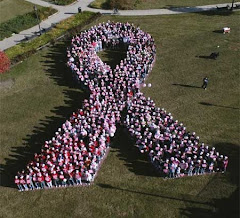.bmp)
.JPG)