Monday, August 15, 2011
Is it really mid August already?
Many of you may remember the days when you would get an e-mail from me asking for a donation for the American Cancer Society's annual Relay for Life event. I haven't participated in that for a few years now because, well, I've been busy with other cancer related concerns. My transplant buddy, Linda, who passed away last month from her second relapse of AML (see my last two posts), told me about the Leukemia and Lymphoma Society's annual Light the Night walk, and we planned to participate together. I promised Linda and her family that I would not only beat this disease, but that I would make as much noise as possible to educate people about AML, the need for donors, the importance of research and the need for financial support.
My law firm, Lowenstein Sandler PC, has been sponsoring quarterly events for the past couple of years under a pro bono program called Lowenstein Cares. So I thought to myself, "Self, wouldn't it be cool if Lowenstein sponsored a team for the Light the Night walk?" I was planning to participate in Light the Night somehow, but I wasn't sure how the firm would respond to my idea. The firm, including several individuals, many of whom I hardly know, has been beyond supportive of me, especially over these last two years. So I shouldn't have been surprised at the speed with which the Pro Bono Program endorsed the suggestion.
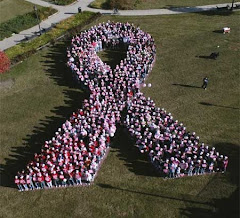
We now have an official team, "Lowenstein Lights the Night" for the New Jersey and New York offices, and we even have a team for our California office, "Lowenstein Lights the Night - Palo Alto." The New Jersey walk will be on Saturday, October 15th beginning at 5 p.m. at Headquarters Plaza in Morristown, and the California walk will be on the same day at Palo Alto High School in Palo Alto. There are a couple of ways to participate:
1. Walk with us. If you click on the red "Join" button on the bottom of either of the team pages, you will be guided to a page explaining how to join the team. Once you join a team, you will then be able to set up your own personal webpage, where you can set your own goal, send out donation requests and invitations to the walk, utilize templates, establish an address book and make use of other helpful tools. You don't have to work at Lowenstein to be part of our teams, and I highly encourage my personal local friends to join us in Morristown.
2. If you can't join either team as a walker, you can make a donation on one of the team webpages or on my personal webpage. For general information about the Light the Night walk, click here.
Although the walk is only two months away, I'm optimistic that I'll make it around the two mile course by that time. My symptoms haven't changed much since my last update -- stomach pain, lack of appetite, tremors and I'm still underweight. I've had a few bad weeks lately, but I hope to see some improvement soon, since I was finally taken off steroids last week for the first time in eight months. The problem with cutting down on steroids (as I've done four times now), is that the lower the dose, the more I feel like I've been hit by a bus. They're evil that way. But they treat flare ups of Graft vs. Host Disease, which is very serious. GVHD is also evil, but it's a sign that remission is holding and the transplant is working. Everything has its pros and cons in Transplant World. The trick is to focus on the big picture, and in my case, it's very positive. My next step is to slowly cut down on the other immunosupressant, Prograf (Tacrolimus), which is a pretty intense anti-rejection drug. Once I'm off Prograf, I should feel stronger, eat better, and hopefully go back to work!
In the meantime, I struggle with a warped sense of time. On the one hand, it seems like time is standing still. My recovery is taking so much longer than I ever imagined. Every month I think I'll turn a corner and start to feel like my old self again. But then I remember everything that I've put my body through, and I realize how resilient the human body can be. On the other hand, I look at the calendar and can't believe that the summer's almost over. The seasons come and go, no matter what. And as my birthday approaches in a couple of weeks, I remember all that I've survived this last year and where I was last August for my birthday. Three long time friends took me out to dinner in Phoenix when I was there to move my father into an assisted living campus. I then came home to another bone marrow biopsy. While waiting for the results, the litigation paralegals threw me a surprise 50th birthday party at work. By the end of the week I learned that I had relapsed and was headed for more consults, more treatment and a stem cell transplant, only to then enter the abyss of recovery.
So here I am -- a year later, happy to be here, grateful for all the love and support I've received from so many. I'll never dismiss birthdays as meaningless again. What better way to mark the milestone than to help raise money for a cause that's so close to home? The October walk will be here before we know it, and right behind it my 1st transplant birthday on November 17th. What a great second chance to be young again!
Kathy
CANcer + HEALth = CAN HEAL
My law firm, Lowenstein Sandler PC, has been sponsoring quarterly events for the past couple of years under a pro bono program called Lowenstein Cares. So I thought to myself, "Self, wouldn't it be cool if Lowenstein sponsored a team for the Light the Night walk?" I was planning to participate in Light the Night somehow, but I wasn't sure how the firm would respond to my idea. The firm, including several individuals, many of whom I hardly know, has been beyond supportive of me, especially over these last two years. So I shouldn't have been surprised at the speed with which the Pro Bono Program endorsed the suggestion.
We now have an official team, "Lowenstein Lights the Night" for the New Jersey and New York offices, and we even have a team for our California office, "Lowenstein Lights the Night - Palo Alto." The New Jersey walk will be on Saturday, October 15th beginning at 5 p.m. at Headquarters Plaza in Morristown, and the California walk will be on the same day at Palo Alto High School in Palo Alto. There are a couple of ways to participate:
1. Walk with us. If you click on the red "Join" button on the bottom of either of the team pages, you will be guided to a page explaining how to join the team. Once you join a team, you will then be able to set up your own personal webpage, where you can set your own goal, send out donation requests and invitations to the walk, utilize templates, establish an address book and make use of other helpful tools. You don't have to work at Lowenstein to be part of our teams, and I highly encourage my personal local friends to join us in Morristown.
2. If you can't join either team as a walker, you can make a donation on one of the team webpages or on my personal webpage. For general information about the Light the Night walk, click here.
Although the walk is only two months away, I'm optimistic that I'll make it around the two mile course by that time. My symptoms haven't changed much since my last update -- stomach pain, lack of appetite, tremors and I'm still underweight. I've had a few bad weeks lately, but I hope to see some improvement soon, since I was finally taken off steroids last week for the first time in eight months. The problem with cutting down on steroids (as I've done four times now), is that the lower the dose, the more I feel like I've been hit by a bus. They're evil that way. But they treat flare ups of Graft vs. Host Disease, which is very serious. GVHD is also evil, but it's a sign that remission is holding and the transplant is working. Everything has its pros and cons in Transplant World. The trick is to focus on the big picture, and in my case, it's very positive. My next step is to slowly cut down on the other immunosupressant, Prograf (Tacrolimus), which is a pretty intense anti-rejection drug. Once I'm off Prograf, I should feel stronger, eat better, and hopefully go back to work!
In the meantime, I struggle with a warped sense of time. On the one hand, it seems like time is standing still. My recovery is taking so much longer than I ever imagined. Every month I think I'll turn a corner and start to feel like my old self again. But then I remember everything that I've put my body through, and I realize how resilient the human body can be. On the other hand, I look at the calendar and can't believe that the summer's almost over. The seasons come and go, no matter what. And as my birthday approaches in a couple of weeks, I remember all that I've survived this last year and where I was last August for my birthday. Three long time friends took me out to dinner in Phoenix when I was there to move my father into an assisted living campus. I then came home to another bone marrow biopsy. While waiting for the results, the litigation paralegals threw me a surprise 50th birthday party at work. By the end of the week I learned that I had relapsed and was headed for more consults, more treatment and a stem cell transplant, only to then enter the abyss of recovery.
So here I am -- a year later, happy to be here, grateful for all the love and support I've received from so many. I'll never dismiss birthdays as meaningless again. What better way to mark the milestone than to help raise money for a cause that's so close to home? The October walk will be here before we know it, and right behind it my 1st transplant birthday on November 17th. What a great second chance to be young again!
Kathy
CANcer + HEALth = CAN HEAL
Friday, July 15, 2011
The lady in the teardrop dress
Ever remember something from a dream, or series of dreams, that you had as a little kid? Last week, as I was driving home from visiting my friend Linda in hospice (see my last post), a memory pushed its way into my consciousness for the first time in many decades.
I don't really remember my dreams. If I had to list every dream that I can remember, there may be two or three, total. And with all the chemotherapy I've had in the last two years, "chemo brain" has really taken its toll. (See my Jan. 19, 2010 post on this subject.) But that day, thinking about Linda, I remembered my dreams about the lady in the teardrop dress. I must have been about five or six when I had them. All I remember is that she was really nice and pretty, she wore a teardrop shaped dress (whatever that is), which I think was gold, and I was excited whenever she came to me. I can't remember what she said, what we did or anything else about the dreams. I just knew that they were special.
When Linda relapsed, I went into a bit of a spin. Linda's recovery was going great, better than mine. There was nothing that anyone could have done to prevent her from relapsing, and I knew that it could have been me just as easily as her. It was very sobering and difficult to process. But I think that the lady in the teardrop dress came back to me, as a memory this time, to bring me a message of comfort: I'm going to be ok; she is with me and will stay with me. Maybe she's an angel. Maybe I made her up in my dreams as a gift to myself when I was little. It doesn't matter where she came from. She helped me focus on the loving aspects of Linda's tragic ordeal. And there were many.
Linda died earlier this week, on July 11th, in her mid 50s. Today was the funeral and burial. As I left the cemetery, her husband, Joe, said, "Kath, you have to beat this thing -- especially now that she's gone." What Joe didn't know was that, in a private moment with Linda at the hospice center, I made her a promise: to do all the things that we were planning to do, now for both of us. We vowed that when we recovered, we would get involved with fundraisers, help with donor drives, educate people about leukemia, help other patients, speak out as much as possible.... I will keep my promise to my friend.
I am indescribably grateful to the Federico family, Joe, Marc, Jon, Michael, Pete and Yolanda, not only for the love and tenderness they had for Linda, but for the love and support they have given me. They, along with the lady in the teardrop dress, made these last three weeks truly amazing.
Kathy
CANcer + HEALth = CAN HEAL
I don't really remember my dreams. If I had to list every dream that I can remember, there may be two or three, total. And with all the chemotherapy I've had in the last two years, "chemo brain" has really taken its toll. (See my Jan. 19, 2010 post on this subject.) But that day, thinking about Linda, I remembered my dreams about the lady in the teardrop dress. I must have been about five or six when I had them. All I remember is that she was really nice and pretty, she wore a teardrop shaped dress (whatever that is), which I think was gold, and I was excited whenever she came to me. I can't remember what she said, what we did or anything else about the dreams. I just knew that they were special.
When Linda relapsed, I went into a bit of a spin. Linda's recovery was going great, better than mine. There was nothing that anyone could have done to prevent her from relapsing, and I knew that it could have been me just as easily as her. It was very sobering and difficult to process. But I think that the lady in the teardrop dress came back to me, as a memory this time, to bring me a message of comfort: I'm going to be ok; she is with me and will stay with me. Maybe she's an angel. Maybe I made her up in my dreams as a gift to myself when I was little. It doesn't matter where she came from. She helped me focus on the loving aspects of Linda's tragic ordeal. And there were many.
Linda died earlier this week, on July 11th, in her mid 50s. Today was the funeral and burial. As I left the cemetery, her husband, Joe, said, "Kath, you have to beat this thing -- especially now that she's gone." What Joe didn't know was that, in a private moment with Linda at the hospice center, I made her a promise: to do all the things that we were planning to do, now for both of us. We vowed that when we recovered, we would get involved with fundraisers, help with donor drives, educate people about leukemia, help other patients, speak out as much as possible.... I will keep my promise to my friend.
I am indescribably grateful to the Federico family, Joe, Marc, Jon, Michael, Pete and Yolanda, not only for the love and tenderness they had for Linda, but for the love and support they have given me. They, along with the lady in the teardrop dress, made these last three weeks truly amazing.
Kathy
CANcer + HEALth = CAN HEAL
Wednesday, July 6, 2011
Life's Extremes
Why is life always so extreme? I wouldn't mind a couple of years of boring and uneventful. How we respond to extremes may be the only thing that we can control when they stop us in our tracks. Sometimes it's easy. Here's an example:
Not satisfied with the plan to wait 3 months to figure out if the lung lesion I wrote about in my last couple of posts is a tumor or an infection, I asked Dr. Rowley if there was something more we could do. He suggested a follow up chest CT to compare to the PET/CT a month earlier. (A CT shows much more detail than a PET, which is a broader scan from mid skull to mid thigh. A PET/CT combines both, with the CT honing in on a specific area.) I sent the images to Dr. Georgiades at Johns Hopkins, and he called me with unexpected news. He said that the lesion has gotten smaller, and that he thinks it's an infection because "cancer doesn't shrink by itself." I told him I was never so happy to have a lung infection! No tumor, no need for an ablation! I was so relieved, I walked around dazed for quite a while. Avoiding a surgical procedure is huge, since every medical intervention seems to have a domino effect on the progress of my recovery. This news bolsters my theory that maybe the lung metastases have all been killed. One would think that any lingering cancer seeds would have sprouted at a time when I had absolutely no immune system, right? Responding to this extreme was easy.
But I still have a lung infection to deal with. Once we learned that the lesion is an infection, I began a course of heavy duty antibiotics, which, predictably, is wreaking havoc on my stomach. I can barely eat anything, and as I write this, I dread my next attempt at a meal. I'm down to 90 pounds and very tired. I've realized the difference between energy and stamina. Energy can be rallied short term. Stamina is a whole different ballgame. It's tempting to turn my exciting news into something negative, but I remind myself that these symptoms are a welcome alternative to having a lung tumor.
Here's an example of an extreme that's not so easy to respond to:
Two weeks ago I received a call from my friend Linda's husband, Joe. I met Linda during my pre-transplant chemo treatments last September. She was also fighting relapsed AML and we shared the same basic game plan to beat leukemia for the second time. We both had unrelated male donors, likely from Europe, and Linda got her bone marrow transplant the day after I got my stem cell transplant. We became friends and kept up with each other after leaving the hospital. Joe was calling to tell me that Linda had relapsed again. I was devastated. Joe was devastated. I couldn't even imagine how their 3 sons, young men just figuring out what to do with their lives, were coping. I tried to call on all the spiritual principles I know to be true, to find a way to process this horrible news, but I came up empty. The next day I learned that Linda had had a stroke the night before. This was a major setback because it left her too weak to receive treatment for the leukemia.
AML produces immature white blood cells that grow like crazy, forming a sludge in the bloodstream. Healthy blood can't get to vital organs because of this sludge and, if I were to guess, this is why she had the stroke. Normally, someone in this situation would receive more chemotherapy to put them into remission before receiving an infusion of lymphocytes from the donor. Lymphocytes are among several different types of white blood cells. They produce "natural killer cells," or NK cells, which kill cancer. A lymphocyte infusion is the best shot for recovery from relapse within a year of transplant. It's kind of a long shot, but it's usually the best shot. Unfortunately for Linda, the stroke kept her from being able to receive chemo, which would have been the necessary first step.
Linda is now in hospice. I've seen her several times, and Linda herself is showing me a different way to respond to this unthinkable situation. She is facing her death with such grace, it's hard to stay in a place of fear. She is surrounded by so many people who love her, all she has to do is put out her hand and there's someone there to take it. In knowing that, she seems free. It's the most amazing thing to witness.
After so many terrifying free falls over the past 11 years on this roller coaster called cancer, I really thought I had a handle on death. Watching myself respond to Linda's tragic relapse, I realize that I'm not as advanced as I thought. But I'm closer, only because Joe, Marc, Jon, Michael and their wonderful family have allowed me to be a part of their last two weeks. Pain and grief are in the forecast. There's no avoiding it. For me, I hope to temper these feelings by focusing on Linda's incredible will and the love that surrounds her.
The extremes of life are what we remember the most, the times that make us either grow, or break us. The choice -- which I think is the hardest thing we face -- is up to us.
Kathy
CANcer + HEALth = CAN HEAL
Not satisfied with the plan to wait 3 months to figure out if the lung lesion I wrote about in my last couple of posts is a tumor or an infection, I asked Dr. Rowley if there was something more we could do. He suggested a follow up chest CT to compare to the PET/CT a month earlier. (A CT shows much more detail than a PET, which is a broader scan from mid skull to mid thigh. A PET/CT combines both, with the CT honing in on a specific area.) I sent the images to Dr. Georgiades at Johns Hopkins, and he called me with unexpected news. He said that the lesion has gotten smaller, and that he thinks it's an infection because "cancer doesn't shrink by itself." I told him I was never so happy to have a lung infection! No tumor, no need for an ablation! I was so relieved, I walked around dazed for quite a while. Avoiding a surgical procedure is huge, since every medical intervention seems to have a domino effect on the progress of my recovery. This news bolsters my theory that maybe the lung metastases have all been killed. One would think that any lingering cancer seeds would have sprouted at a time when I had absolutely no immune system, right? Responding to this extreme was easy.
But I still have a lung infection to deal with. Once we learned that the lesion is an infection, I began a course of heavy duty antibiotics, which, predictably, is wreaking havoc on my stomach. I can barely eat anything, and as I write this, I dread my next attempt at a meal. I'm down to 90 pounds and very tired. I've realized the difference between energy and stamina. Energy can be rallied short term. Stamina is a whole different ballgame. It's tempting to turn my exciting news into something negative, but I remind myself that these symptoms are a welcome alternative to having a lung tumor.
Here's an example of an extreme that's not so easy to respond to:
Two weeks ago I received a call from my friend Linda's husband, Joe. I met Linda during my pre-transplant chemo treatments last September. She was also fighting relapsed AML and we shared the same basic game plan to beat leukemia for the second time. We both had unrelated male donors, likely from Europe, and Linda got her bone marrow transplant the day after I got my stem cell transplant. We became friends and kept up with each other after leaving the hospital. Joe was calling to tell me that Linda had relapsed again. I was devastated. Joe was devastated. I couldn't even imagine how their 3 sons, young men just figuring out what to do with their lives, were coping. I tried to call on all the spiritual principles I know to be true, to find a way to process this horrible news, but I came up empty. The next day I learned that Linda had had a stroke the night before. This was a major setback because it left her too weak to receive treatment for the leukemia.
AML produces immature white blood cells that grow like crazy, forming a sludge in the bloodstream. Healthy blood can't get to vital organs because of this sludge and, if I were to guess, this is why she had the stroke. Normally, someone in this situation would receive more chemotherapy to put them into remission before receiving an infusion of lymphocytes from the donor. Lymphocytes are among several different types of white blood cells. They produce "natural killer cells," or NK cells, which kill cancer. A lymphocyte infusion is the best shot for recovery from relapse within a year of transplant. It's kind of a long shot, but it's usually the best shot. Unfortunately for Linda, the stroke kept her from being able to receive chemo, which would have been the necessary first step.
Linda is now in hospice. I've seen her several times, and Linda herself is showing me a different way to respond to this unthinkable situation. She is facing her death with such grace, it's hard to stay in a place of fear. She is surrounded by so many people who love her, all she has to do is put out her hand and there's someone there to take it. In knowing that, she seems free. It's the most amazing thing to witness.
After so many terrifying free falls over the past 11 years on this roller coaster called cancer, I really thought I had a handle on death. Watching myself respond to Linda's tragic relapse, I realize that I'm not as advanced as I thought. But I'm closer, only because Joe, Marc, Jon, Michael and their wonderful family have allowed me to be a part of their last two weeks. Pain and grief are in the forecast. There's no avoiding it. For me, I hope to temper these feelings by focusing on Linda's incredible will and the love that surrounds her.
The extremes of life are what we remember the most, the times that make us either grow, or break us. The choice -- which I think is the hardest thing we face -- is up to us.
Kathy
CANcer + HEALth = CAN HEAL
Monday, June 13, 2011
Change of Plans
At the beginning of my last post, I posed the question,
I took my reports from Johns Hopkins to Dr. Rowley, who reminded me that three things can "light up" on a PET/CT: inflammation, infection and cancer. Dr. Rowley suspects that the lesion might actually be an infection rather than a tumor, which would be great news! (I never thought I'd be hoping for a lung infection.) He also told me that inflammation from a radiofrequency ablation may trigger GVHD. That would not be good. Ablating an infection instead of a tumor would also not be good. He consulted with Dr. Georgiades and they decided that, since ACCB grows so slowly, it's better to ablate when we are able to confirm that the lesion really is a tumor and when I'm not at risk for triggering GVHD. The plan now is to have a chest CT in two weeks to see, what, if any changes appear. Because I haven't had any symptoms of infection, I suspect that the new lesion is a tumor, and if it is, I'm off in September for RFA #5 to ablate tumor #8. In any event, that lesion shouldn't get too comfortable....
Other aspects of my recovery are status quo: I'm still having trouble eating, my appetite is pitiful, the tremors are coming back as I taper off the steroids for the third time, and I'm still hovering around 93 pounds. On the upside, I feel like I'm getting stronger, I'm able to do more, and I'm seeing more friends and extended family than I have for the last nine months. Because my blood counts are so good, it's safe for me to resume some of the things I used to do (like going to church, taking walks, etc.) and this keeps me sane. I've also been going to support groups, through which I've been able to network with other survivors and learn about projects, research and events relating to blood cancers.
Although my days are busy when I'm feeling well, I'm antsy to get on with it. Enough with this recovery stuff. I never imagined that I'd measure my progress by the seasons. Transplants are hard on people with Type A personalities. I've never been a very patient patient. But that's how it is, and I'll get there eventually. The most important thing is that I'm in remission and I'm getting stronger. If only someone would tell my tummy! For now, I have three immediate goals: recover enough to return to work, get rid of this lung lesion one way or another, and get medical clearance for a glass of pinot noir! That's not too much to ask, is it?
Cheers!
Kathy
CANcer + HEALth = CAN HEAL
If you have to deal with not so good news, is it better to find out about it and take action when things are "back to normal" or when things are kind of better but not so great?The plan for ablating the newly discovered lesion in my right lung on June 15th has been put on hold for three months. It appears that taking action when I'm stronger and things are, well, closer to "back to normal," is a better way to go.
I took my reports from Johns Hopkins to Dr. Rowley, who reminded me that three things can "light up" on a PET/CT: inflammation, infection and cancer. Dr. Rowley suspects that the lesion might actually be an infection rather than a tumor, which would be great news! (I never thought I'd be hoping for a lung infection.) He also told me that inflammation from a radiofrequency ablation may trigger GVHD. That would not be good. Ablating an infection instead of a tumor would also not be good. He consulted with Dr. Georgiades and they decided that, since ACCB grows so slowly, it's better to ablate when we are able to confirm that the lesion really is a tumor and when I'm not at risk for triggering GVHD. The plan now is to have a chest CT in two weeks to see, what, if any changes appear. Because I haven't had any symptoms of infection, I suspect that the new lesion is a tumor, and if it is, I'm off in September for RFA #5 to ablate tumor #8. In any event, that lesion shouldn't get too comfortable....
Other aspects of my recovery are status quo: I'm still having trouble eating, my appetite is pitiful, the tremors are coming back as I taper off the steroids for the third time, and I'm still hovering around 93 pounds. On the upside, I feel like I'm getting stronger, I'm able to do more, and I'm seeing more friends and extended family than I have for the last nine months. Because my blood counts are so good, it's safe for me to resume some of the things I used to do (like going to church, taking walks, etc.) and this keeps me sane. I've also been going to support groups, through which I've been able to network with other survivors and learn about projects, research and events relating to blood cancers.
Although my days are busy when I'm feeling well, I'm antsy to get on with it. Enough with this recovery stuff. I never imagined that I'd measure my progress by the seasons. Transplants are hard on people with Type A personalities. I've never been a very patient patient. But that's how it is, and I'll get there eventually. The most important thing is that I'm in remission and I'm getting stronger. If only someone would tell my tummy! For now, I have three immediate goals: recover enough to return to work, get rid of this lung lesion one way or another, and get medical clearance for a glass of pinot noir! That's not too much to ask, is it?
Cheers!
Kathy
CANcer + HEALth = CAN HEAL
Saturday, May 28, 2011
Being One for the Records
If you have to deal with not so good news, is it better to find out about it and take action when things are "back to normal" or when things are kind of better but not so great? I didn't have much of a choice this week. I received some not so great news on Thursday when I had a PET/CT scan at Johns Hopkins. I learned that I have a new tumor in my right lung. I was surprised and disappointed, but as I've been telling people, one new tumor is better than twelve. I know this sounds strange, but in the grand scheme of things, one metastatic lung tumor, for me, is not really that big of a deal. I know what it is and what to do.
As you may remember (it seems so long ago), 10 tumors were discovered in my lungs in October of 2006. Three were removed surgically, and when the pathology confirmed metastatic disease from Adenoid Cystic Carcinoma of the Breast (ACCB) -- the first cancer diagnoses in 2000 -- the remaining seven were killed with radiofrequency ablation (RFA) at Johns Hopkins in Baltimore by Dr. Georgiades. (See November 2008 posts.)
When I got my first negative PET/CT report showing "no detectable cancer" in September 2009, you may also remember that I threw myself a Negative PET Scan Party in October to celebrate. Two days after the party I became very ill and drove myself to the ER. The next morning I was told that I had an aggressive form of leukemia (AML) and was given a very grim prognosis. And the games began for cancer #2. (See 10/22/09 post, Nothing Like a Good Party Before a Storm.)
When Dr. Georgiades showed me an image of the tumor from the scan on Thursday, I asked him why this happened. It was a stupid question. He could have said, "because it's cancer, dummy." But he knew what I meant. If cancer were to show up again, I thought it would be the 2 or 3 little tiny spots that he calls ditzels that we've been watching for the past 3 years and are too small to ablate. Where did this new one come from? He suspects that if I had a cancer seed, which otherwise may have just sat there forever, that seed may have grown into a tumor because I trashed my immune system. It popped up before my new immune system kicked in. It makes sense given the last 1 1/2 years (minus the 5 months I was in remission before the relapse) of being treated with an alarming amount of toxic medicines and chemotherapy, the last of which destroyed my bone marrow permanently.
Here's the positive spin on this new tumor situation: When I asked about the ditzels, Dr. Georgiades told me that they've actually gotten smaller. If I grew a new lung tumor, wouldn't you think that a weak immune system would have allowed the ditzels to grow too? Maybe that means that the ditzels aren't cancer after all. As I've said before, we all have spots on our lungs because our world has become filthy and our lungs are filters, like sponges. A lot of different kinds of junk gets stored up in a sponge over time. Only the spots that light up on a PET scan and grow over time are likely to be cancer.
Plus, I only have one tumor. If I had lots of dormant seeds it stands to reason, like the ditzels, that they would have grown too. Yes, I was pretty bummed out driving home from Baltimore. But mainly, I was upset about having to go through another procedure to deal with cancer, especially now. But knowing what's going on is better than not knowing what's going on. And the tumor isn't going away. Let's just kill the killer and get on with it.
Needing to exert as much control as possible, I called one of Dr. Gerogiades' nurses from the hospital lobby and tentatively scheduled the RFA for June 15th. It's a same day procedure, which I've had four times before, so I don't expect much drama. I'll stay with my cousin, Karen, who graciously puts me up every time I make the trek to Hopkins. A week after the RFA I probably won't have a single physical sign that anything was done -- not even a band-aid at the site. It's a pretty amazing procedure (see 11/2/08 post, Radiofrequency Ablation - RFA). Anyone new to this blog who is curious about this 10 minute treatment can click here to watch a short video, filmed for the documentary that led me to Dr. Georgiades in the first place.
After all my pre-transplant tests were completed last October, I met with Dr. Rowley, my transplant doctor. He said, "the only thing I'm slightly concerned about is the cancer that was found to have spread to your lungs." "Oh, that" I said, dismissing him with a wave of my hand. "That's completely under control. It grows very slowly, can remain dormant for decades, and everything that's been identified as cancer has been killed. Because ACCB is so rare, you won't find much about it. It only occurs in <.1% of all breast cancer patients and of those it metastasizes in about 6% of the cases. There's only a few of us, maybe a couple of dozen at most since the 1940s." "Yes," he said. "And of those few, how many have had transplants?" "Oh, right. Probably none," I realized, feeling again, like the only one on the planet with my ridiculously rare medical circumstances. Oh wait. I probably am the only one on the planet....
Several people have suggested that I write a book. Who would believe it? I have a hard time believing it myself. Being "one for the records" can be a scary thing. But at a certain point, it also becomes humorous -- one of those "oh, paleez" situations. I'm determined to win this prolonged battle and use my unique misfortune to contribute somehow to the landscape of knowledge on two very different diseases. But before I can do that, I need to get off this rickety and dangerous roller coaster once and for all. On June 15th, I'll be one step closer.
Kathy
CANcer + HEALth = CAN HEAL
As you may remember (it seems so long ago), 10 tumors were discovered in my lungs in October of 2006. Three were removed surgically, and when the pathology confirmed metastatic disease from Adenoid Cystic Carcinoma of the Breast (ACCB) -- the first cancer diagnoses in 2000 -- the remaining seven were killed with radiofrequency ablation (RFA) at Johns Hopkins in Baltimore by Dr. Georgiades. (See November 2008 posts.)
When I got my first negative PET/CT report showing "no detectable cancer" in September 2009, you may also remember that I threw myself a Negative PET Scan Party in October to celebrate. Two days after the party I became very ill and drove myself to the ER. The next morning I was told that I had an aggressive form of leukemia (AML) and was given a very grim prognosis. And the games began for cancer #2. (See 10/22/09 post, Nothing Like a Good Party Before a Storm.)
When Dr. Georgiades showed me an image of the tumor from the scan on Thursday, I asked him why this happened. It was a stupid question. He could have said, "because it's cancer, dummy." But he knew what I meant. If cancer were to show up again, I thought it would be the 2 or 3 little tiny spots that he calls ditzels that we've been watching for the past 3 years and are too small to ablate. Where did this new one come from? He suspects that if I had a cancer seed, which otherwise may have just sat there forever, that seed may have grown into a tumor because I trashed my immune system. It popped up before my new immune system kicked in. It makes sense given the last 1 1/2 years (minus the 5 months I was in remission before the relapse) of being treated with an alarming amount of toxic medicines and chemotherapy, the last of which destroyed my bone marrow permanently.
Here's the positive spin on this new tumor situation: When I asked about the ditzels, Dr. Georgiades told me that they've actually gotten smaller. If I grew a new lung tumor, wouldn't you think that a weak immune system would have allowed the ditzels to grow too? Maybe that means that the ditzels aren't cancer after all. As I've said before, we all have spots on our lungs because our world has become filthy and our lungs are filters, like sponges. A lot of different kinds of junk gets stored up in a sponge over time. Only the spots that light up on a PET scan and grow over time are likely to be cancer.
Plus, I only have one tumor. If I had lots of dormant seeds it stands to reason, like the ditzels, that they would have grown too. Yes, I was pretty bummed out driving home from Baltimore. But mainly, I was upset about having to go through another procedure to deal with cancer, especially now. But knowing what's going on is better than not knowing what's going on. And the tumor isn't going away. Let's just kill the killer and get on with it.
Needing to exert as much control as possible, I called one of Dr. Gerogiades' nurses from the hospital lobby and tentatively scheduled the RFA for June 15th. It's a same day procedure, which I've had four times before, so I don't expect much drama. I'll stay with my cousin, Karen, who graciously puts me up every time I make the trek to Hopkins. A week after the RFA I probably won't have a single physical sign that anything was done -- not even a band-aid at the site. It's a pretty amazing procedure (see 11/2/08 post, Radiofrequency Ablation - RFA). Anyone new to this blog who is curious about this 10 minute treatment can click here to watch a short video, filmed for the documentary that led me to Dr. Georgiades in the first place.
After all my pre-transplant tests were completed last October, I met with Dr. Rowley, my transplant doctor. He said, "the only thing I'm slightly concerned about is the cancer that was found to have spread to your lungs." "Oh, that" I said, dismissing him with a wave of my hand. "That's completely under control. It grows very slowly, can remain dormant for decades, and everything that's been identified as cancer has been killed. Because ACCB is so rare, you won't find much about it. It only occurs in <.1% of all breast cancer patients and of those it metastasizes in about 6% of the cases. There's only a few of us, maybe a couple of dozen at most since the 1940s." "Yes," he said. "And of those few, how many have had transplants?" "Oh, right. Probably none," I realized, feeling again, like the only one on the planet with my ridiculously rare medical circumstances. Oh wait. I probably am the only one on the planet....
Several people have suggested that I write a book. Who would believe it? I have a hard time believing it myself. Being "one for the records" can be a scary thing. But at a certain point, it also becomes humorous -- one of those "oh, paleez" situations. I'm determined to win this prolonged battle and use my unique misfortune to contribute somehow to the landscape of knowledge on two very different diseases. But before I can do that, I need to get off this rickety and dangerous roller coaster once and for all. On June 15th, I'll be one step closer.
Kathy
CANcer + HEALth = CAN HEAL
Subscribe to:
Posts (Atom)